
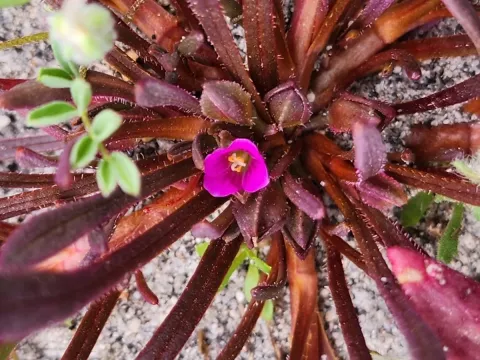
Calandrinia ciliata
Calandrinia ciliata
Calandrinia ciliata, commonly known as redmaids, belongs to the Montiaceae family. It is a succulent-like annual herb that naturally thrives in open, disturbed environments.
What the section contains
Calandrinia ciliata
The seeds should be sown in early spring as soon as the soil has warmed up. Sowing depth should be shallow, as the tiny seeds require light and warmth for successful germination.
For container cultivation, a light, well-draining seed-starting mix is essential. Keep the soil moist until the seedlings emerge, which usually takes about 10 to 14 days under optimal conditions.
Thinning out seedlings is necessary if they are sown too densely. A spacing of 15–20 cm between plants allows for optimal airflow and ensures robust growth of the succulent leaves.
Autumn sowing is possible in regions with mild winters, allowing the plants to establish themselves and bloom earlier in the following spring season.
Sunlight is the most critical factor for Calandrinia ciliata. It requires a full-sun exposure to produce its characteristic vibrant pink to purple flowers and maintain a healthy form.
The plant performs best in sandy or rocky soils with excellent drainage. It is well-adapted to poor soil conditions and does not require high levels of fertilization during the growth cycle.
Watering should be approached with caution. As a succulent-type plant, it stores water in its leaves and is highly drought-tolerant once established in the ground.
The ideal temperature range for this species is between 18°C and 25°C. Excessive heat combined with high humidity can cause stress and diminish the quality of the foliage.
Avoid amending the soil with high-nitrogen fertilizers, as this will lead to weak, elongated stems that struggle to support the weight of the flowers.
Root rot is the primary threat to the plant's survival, specifically in soils with poor drainage. Proper site selection and drainage management are the best preventative measures against this disease.
Fungal issues, such as powdery mildew, may occur if the plants are placed in stagnant, high-humidity environments. Improving air circulation around the plants significantly reduces this risk.
Aphids can target the tender flowering shoots. If observed, a simple jet of water or a mild insecticidal soap can be used to control the population without harming the plant.
Slugs and snails can cause significant damage to young succulent leaves. Placing a protective barrier around the garden bed is an effective way to prevent these pests from reaching the foliage.
Regular monitoring of the plant base for signs of decay is recommended, as early detection of disease is crucial for maintaining the health of the entire flower bed.