
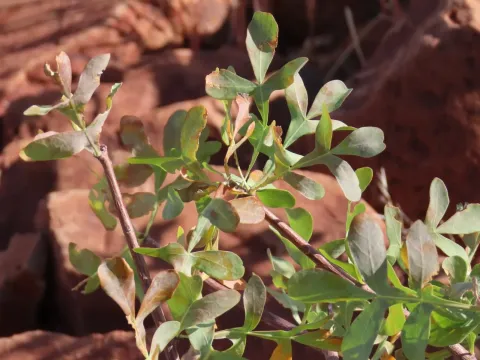
Commiphora wildii
Commiphora wildii
Commiphora wildii is a resilient shrub or small tree belonging to the Burseraceae family, native to the arid environments of the Kaokoveld in Namibia. This species has evolved to thrive in rocky terrain with minimal water availability.
What the section contains
Commiphora wildii
The plant is specifically adapted to extreme desert climates, requiring intense sun exposure and excellent drainage. It does not tolerate waterlogged soil, which makes it highly unsuitable for damp or overly fertile agricultural conditions.
Biological features of the plant include a slow growth rate and the ability to store significant amounts of secondary metabolites in the bark. These compounds are a defense mechanism against drought and local herbivores.
For cultivation purposes, maintaining the natural habitat profile is essential. This includes replicating high-temperature days and cooler nights to ensure the tree reaches maturity and develops its full resin-producing potential.
The plant generally reproduces via seeds in the wild, but in botanical settings, propagation requires specific techniques to handle the tough seed coat and ensure germination in arid-simulation chambers.
The economic focus of Commiphora wildii is the production of its aromatic resin, commercially known as omiboh. Harvesting is a labor-intensive process performed by hand, often by local nomadic populations.
Harvesters make superficial incisions in the bark to trigger the secretion of resin. Once the resin exudes, it hardens over time, allowing for easier collection without causing permanent damage to the vascular system of the plant.
The collected resin is highly valued in the perfume and cosmetics industries for its unique scent profile, often described as woody with hints of citrus and myrrh. It serves as a base note and a fixative in luxury fragrances.
Quality control during the harvest involves strict cleaning protocols to remove debris and bark particles. Only high-purity resin is accepted for export, requiring careful sorting by skilled workers.
Sustainable harvesting practices are strictly enforced to prevent over-extraction. Rotating harvest areas allows the trees to recover their resin stores, ensuring the longevity of these valuable stands for future generations.