
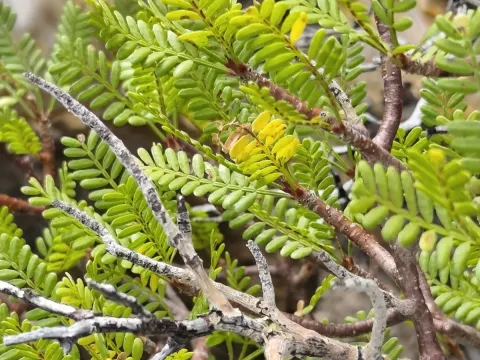
Elephant Tree
Bursera microphylla
Bursera microphylla is primarily propagated through seeds or cuttings in controlled environmental settings. The optimal time for sowing seeds is during the spring, when temperatures consistently remain above 22-25 degrees Celsius, mimicking the onset of the rainy season in its natural habitat.
What the section contains
Elephant Tree
For successful germination, seeds should be soaked in warm water for several hours prior to planting. Sowing is performed in a well-draining substrate consisting of a mix of coarse sand, perlite, and a small amount of peat to retain moisture.
Seed depth should not exceed 0.5-1 cm, as Bursera seeds are sensitive to soil density. It is critical to ensure constant yet moderate soil moisture until the first sprouts emerge, while strictly avoiding waterlogging, which can lead to seed decay.
After germination, seedlings require gradual adaptation to direct sunlight. Pricking out or transplanting seedlings should be done with extreme care to avoid damaging the fragile root system, which serves as the foundation for the plant's future survival.
In commercial or collection settings, cutting propagation is also used, though the success rate for Bursera is lower compared to seed propagation. Cuttings require treatment with rooting hormones and must be kept in greenhouse conditions with high humidity and temperature until rooting occurs.
Bursera microphylla, a member of the Burseraceae family, is a typical flora of arid zones, native to the Sonoran and California deserts. The plant is highly adapted to extremely high temperatures and prolonged periods of drought.
The primary requirement for the soil is a high degree of aeration and drainage. The culture reacts extremely negatively to heavy clay soils that promote water stagnation, which triggers the development of fungal root rot and leads to the plant's death.
For healthy development, Bursera requires direct sunlight throughout the entire day. Under insufficient lighting, the plant becomes leggy, loses its characteristic trunk shape, becomes fragile, and is less resistant to diseases.
The climate regime must exclude freezing temperatures. Bursera microphylla is a tropical and subtropical plant, so in the event of frost, protection or relocation to a heated indoor space with good ventilation is mandatory.
The watering regime must match the plant's seasonal rhythms: active watering during the growing season and minimal moisture (dormancy period) during the colder months. Overwatering in winter is a critical mistake when cultivating this species.
Bursera microphylla is not an agricultural crop in the traditional food production sense; therefore, commodity yield metrics are rarely applied. It is most often cultivated for decorative purposes, landscape design, or as a rare raw material component.
The main "harvest" in this context consists of plant biomass valued in phytotherapy and the perfume industry. Resins and essential oils extracted from the bark and wood are valuable products with stable demand in niche markets.
Growth rates for Bursera microphylla are quite slow, making the process of obtaining commercial-grade wood or significant resin quantities lengthy. In controlled agronomic conditions, growth can be accelerated, but this requires precise adherence to microclimatic parameters.
Resin collection is conducted by making superficial incisions in the bark, which requires high personnel expertise to avoid causing irreparable harm to the plant. The optimal collection period is at the end of the rainy season when tissue metabolic processes slow down.
Using the plant as a bonsai or decorative element requires crown formation, which indirectly influences its market value. High-quality trunk formation with the characteristic "elephant" swelling significantly increases the specimen's worth.
The primary threats to Bursera are pathogenic microorganisms that develop in conditions of soil overwatering. Root rots caused by Fusarium and Phytophthora fungi can destroy the plant in a short time if agronomic practices are violated.
- Mealybugs (the main pest in indoor cultivation).
- Spider mites under low air humidity conditions.
- Root rot caused by excessive watering.
- Scale insects affecting stems and bark.
- Viral infections due to poor sanitary practices.
Pest control in commercial settings is complicated by the sensitivity of Bursera itself to aggressive chemical pesticides. Biological control methods, such as entomophages or specialized botanical extracts, are recommended.
In case of fungal infection, immediate removal of damaged tissue fragments and treatment with systemic fungicides is necessary. It is crucial to establish proper ventilation to prevent the further spread of the infection.
Disease prevention consists of maintaining clean pruning tools, using sterilized substrates, and strictly adhering to quarantine measures when introducing new plants into a collection or field.