
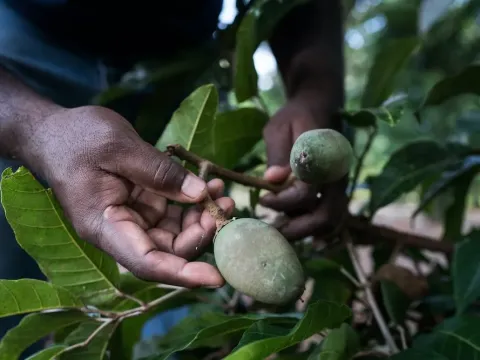
Canarium indicum
Canarium indicum
Canarium indicum, commonly known as the Galip nut or Java almond, is a large evergreen tree belonging to the Burseraceae family. It is a vital species in the tropical ecosystems of Southeast Asia and the Pacific Islands, often reaching heights of over 30 meters.
What the section contains
Canarium indicum
The tree thrives in humid tropical climates characterized by high annual rainfall and consistent temperatures. It does not tolerate frost or prolonged drought, making it an ideal candidate for cultivation in equatorial forest regions.
Regarding soil preferences, the tree performs best in deep, fertile, and well-drained soils. While it can adapt to various soil types, waterlogging must be avoided as it can severely damage the root system and inhibit the growth of the tree.
Cultivation requires careful management of sunlight exposure. Seedlings benefit from shade provided by larger canopy trees, whereas mature trees require full sunlight to maximize their fruit-bearing potential and photosynthetic efficiency.
Good agricultural practice involves maintaining clear ground around the base of the trees and applying organic mulch to preserve soil moisture and nutrient content. Proper spacing is essential to ensure adequate airflow, which is critical for tree health.
The primary agricultural output of Canarium indicum is its nutrient-dense nut. The kernel is highly valued for its protein, healthy fats, and vitamin content, making it a sustainable and nutritious food source for local communities and international markets.
Beyond the nuts, the tree provides valuable timber that is utilized in furniture manufacturing and rural construction. The wood is appreciated for its durability and resistance, supporting local economies in the regions where it is cultivated.
A healthy mature tree can yield a significant quantity of fruit annually. With systematic harvesting and post-harvest management, the economic returns from these orchards can be quite competitive with other perennial tropical crops.
The potential for high-value product development, such as specialized oils and gourmet nut snacks, positions this crop as a promising venture for sustainable agroforestry systems in the Pacific region.
In addition to food and wood, the tree produces a fragrant resin that has historically been used in traditional medicine and perfumery, adding another layer of economic utility to the plantation management.
The crop is occasionally susceptible to fungal leaf spots and root rots, particularly in areas with poor drainage and stagnant air. Maintaining good hygiene by removing fallen debris and diseased branches is crucial for disease control.
Insect pests, including various types of borers and fruit-feeding insects, can impact the yield if not monitored correctly. Implementing integrated pest management (IPM) strategies helps keep pest populations below the economic injury level.
Competition from aggressive weeds can stunt the growth of young trees, making early-stage maintenance a priority. Regular weeding and the use of cover crops can effectively manage this threat.
Environmental threats such as extreme storms and high winds can damage the branches and crowns of mature trees. Strategic planting of windbreaks or choosing sheltered sites can mitigate these risks effectively.
By monitoring the health of the trees through regular inspections, farmers can quickly identify symptoms of stress or infestation, allowing for targeted intervention before a small problem becomes a major crop loss.
Harvesting usually begins when the fruit turns a specific color and begins to drop naturally from the canopy. Manual collection from the ground is common, although controlled shaking can be used for more efficient recovery.
Once harvested, the outer fleshy husk must be removed promptly to prevent fermentation and spoilage. This is typically done manually or using simple mechanical tools to ensure the integrity of the hard-shelled nut inside.
Drying is a critical step in the post-harvest process. Nuts should be dried in a well-ventilated area, away from direct sunlight, to reach an optimal moisture level that prevents mold growth and preserves flavor.
Proper storage is essential to maintain the quality of the kernels. Hermetically sealed containers or climate-controlled warehouses are ideal for preventing rancidity, especially in the humid environments where these nuts are processed.
As the market for Canarium nuts grows, there is an increasing shift towards standardized processing lines that ensure consistent quality, allowing growers to meet international food safety standards.