
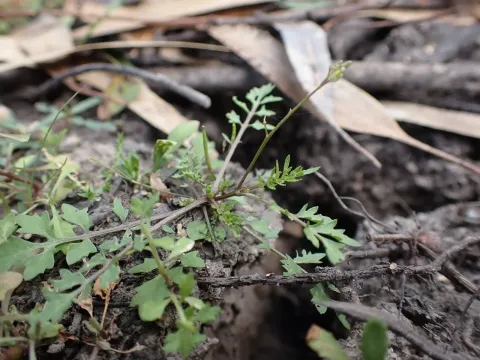
Rorippa eustylis
Rorippa eustylis
Rorippa eustylis is a member of the Brassicaceae (cabbage) family. It is a perennial herbaceous plant that thrives in moist, wetland-like habitats in its natural environment.
What the section contains
Rorippa eustylis
The crop requires consistent moisture and moderate temperatures to thrive, making it an ideal candidate for controlled environments or well-irrigated garden plots.
Optimal growth is achieved in fertile, well-draining loamy soils that are rich in organic matter, ensuring the roots receive both water and essential nutrients.
The plant prefers a pH range that is neutral to slightly acidic, and it performs best in locations that provide plenty of indirect light throughout the day.
In commercial cultivation, maintaining high humidity levels is crucial, as drying out can lead to stunted growth and poor leaf quality in this sensitive species.
Sowing can be performed throughout the year in greenhouse conditions, while outdoor sowing typically begins in early spring once soil temperatures reach 10 degrees Celsius.
Seeds should be sown shallowly, ideally at a depth of no more than 0.5 to 1 centimeter, as they are very small and require light for optimal germination success.
To ensure a continuous supply of fresh greens, it is recommended to stagger sowing intervals every two to three weeks during the peak growing season.
The planting pattern should provide adequate spacing between rows, usually 20 to 25 centimeters, to allow for proper airflow and easier maintenance throughout growth.
Proper soil contact and immediate moisture after sowing are essential to ensure uniform emergence, especially when planting in container or hydroponic substrates.
The yield of Rorippa eustylis is heavily influenced by the intensity of the farming system and the precision of the nutrient management applied during the growing cycle.
In hydroponic or highly managed greenhouse systems, growers can achieve multiple harvests per season due to the plant's rapid regenerative growth after cutting.
A typical yield can range from 2 to 4 kilograms per square meter per harvest cycle, provided that nitrogen fertilization is applied optimally to support leafy growth.
Quality is paramount in leafy green production, and consistent irrigation is the primary factor in ensuring crisp, succulent foliage that is attractive to consumers.
By optimizing plant density and environmental control, farmers can maximize the output while minimizing the duration between successive harvest cuts.
The primary pests for Rorippa eustylis include flea beetles, which can cause significant damage to young leaves during the early stages of plant development.
Poor ventilation and high-humidity microclimates can lead to fungal issues like powdery mildew or root rot, particularly in dense, poorly spaced planting rows.
Integrated pest management strategies, such as physical barriers or crop rotation, are essential to maintain crop health without relying heavily on chemical pesticides.
Monitoring the plants regularly allows for the early detection of localized infections, preventing widespread damage that could compromise the entire harvest.
Promoting healthy airflow and avoiding over-saturation of the soil are the most effective cultural practices for preventing disease outbreaks in this crop.
Harvesting should occur when the leaf rosettes reach their marketable size, which typically takes between 30 and 45 days from the time of sowing.
Using sanitized sharp tools is critical to ensure a clean cut, which prevents disease entry and encourages the plant to regrow effectively after harvest.
The best time to harvest is in the early morning when the plants are turgid, as this significantly improves their shelf life and quality during subsequent transport.
Immediate post-harvest cooling is required to reduce the respiration rate of the leaves and preserve the nutrient density and freshness of the greens.
Proper packaging, which allows for minimal gas exchange and prevents physical damage, is necessary for maintaining market-grade quality during distribution.