
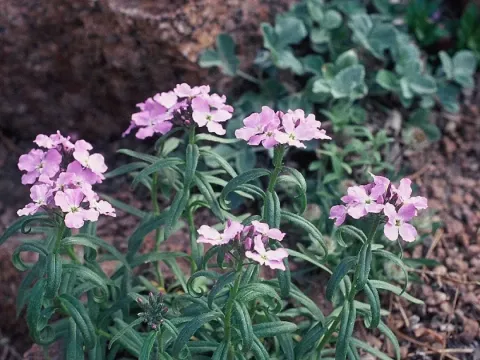
Clausia
Clausia Korn.-Trotzky ex Hayek
Clausia is a perennial herbaceous plant, therefore the timing for its planting or sowing occurs in early spring, as soon as the soil warms up to positive temperatures.
What the section contains

Clausia
The seeds of the plant require preliminary stratification to increase germination energy, which is especially important when establishing plots in regions with a temperate climate.
The sowing depth is usually from 1 to 2 centimeters, which is due to their relatively small size and nutrient reserves.
The optimal time for sowing in open ground is the period when stable warm weather is established without the threat of late frosts, which can damage young seedlings.
Under experimental production conditions, it is possible to grow the plant using seedlings, which allows for shortening the plant adaptation period to open field conditions.
Plants of the genus Clausia prefer well-lit areas with a moderate level of moisture, which is typical for their natural range of distribution.
The culture belongs to the Brassicaceae family and has specific requirements for soil composition: it should be loose, fertile, and have a neutral acidity index.
The plant demonstrates high resistance to drought periods, which is due to a well-developed root system capable of extracting moisture from deep soil layers.
An important development factor is the availability of good drainage, as water stagnation in the root zone extremely negatively affects the condition of both young and mature specimens.
Optimal temperature conditions for active vegetative development lie in the range of +18 to +25 degrees Celsius, which corresponds to the summer period in steppe zones.
Like other representatives of the Brassicaceae family, Clausia can be affected by specific pests, such as the flea beetle, especially at a young age.
Among potential diseases, it is worth noting fungal infections that occur under conditions of excessive humidity and insufficient air circulation between plants.
During the active flowering period, plants can attract leaf-eating insects, so regular monitoring of the phytosanitary state of the crops is recommended.
To prevent the spread of pests, it is recommended to follow crop rotation rules and timely remove weeds from between the rows.
Disease prevention also includes the use of high-quality planting material that has undergone preliminary cleaning and calibration.
Harvesting of vegetative mass or seeds is carried out strictly after the plant reaches the phase of biological maturity, when the color of the fruits changes to that characteristic of the species.
Mechanization of harvesting is possible when optimal raw material humidity is reached, which allows minimizing losses during the threshing of seed pods.
After harvesting, it is extremely important to ensure correct drying conditions to avoid molding and the loss of sowing or commercial qualities of the raw material.
It is recommended to carry out harvesting in the morning hours after the dew has evaporated to prevent premature fruit cracking and seed shedding.
Storage of the harvested crop should be carried out in cool, well-ventilated rooms with a low humidity level to ensure long-term preservation.