
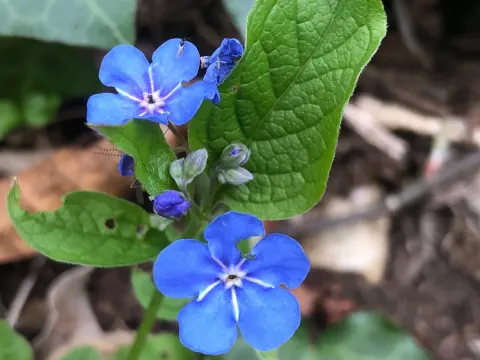
Blue-eyed Mary
Omphalodes verna
Seeds of Omphalodes verna are best sown in autumn, allowing the cold winter period to naturally break their dormancy and ensure high germination rates in spring.
What the section contains
Blue-eyed Mary
If spring sowing is preferred, seeds must undergo artificial stratification at temperatures around 5 degrees Celsius for at least one month before planting.
Vegetative propagation is the most efficient method, involving the division of clumps or root cuttings during the plant's dormant periods.
The ideal times for dividing established patches are early spring before active growth begins or late August, immediately after the plant has finished flowering.
When planting, ensure a distance of 20 to 30 centimeters between plants to provide enough space for their creeping rhizomes to spread and form a mat.
Blue-eyed Mary belongs to the Boraginaceae family and is a robust perennial herb that thrives in cool, shaded woodland environments with filtered light.
The crop performs best in fertile, humus-rich, and well-drained soils that maintain consistent moisture levels throughout the growing season.
Originating from the mountainous regions of Central and Southern Europe, it is well-adapted to temperate climates and hardy in various frost conditions.
Regular maintenance requires providing adequate water during dry spells, as the species does not tolerate prolonged drought, which leads to premature wilting.
Applying a thin layer of compost or organic mulch annually helps maintain soil fertility and protects the roots from temperature fluctuations.
The primary pests affecting this crop are slugs and snails, which can cause significant damage to the lush green foliage during wet and humid weather conditions.
Powdery mildew can occur in overcrowded or poorly ventilated patches, appearing as a dusty white film on the upper surface of the leaves.
Root rot is a common issue if the plants are situated in heavy, waterlogged soils that lack proper aeration, preventing the roots from breathing.
Preventive measures include keeping the planting site free of debris and ensuring there is enough spacing to allow for good air circulation between the plants.
- Use of organic bait traps to manage slug populations.
- Thinning out dense patches to improve air movement.
- Improving drainage by adding sand or grit to the soil profile.