
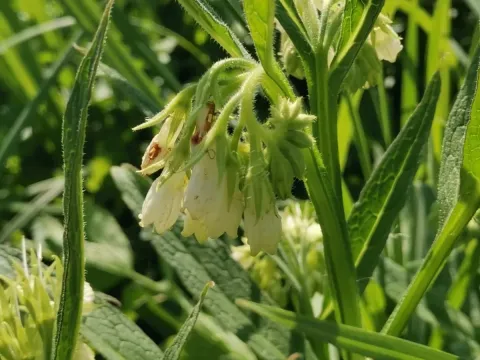
Bohemian comfrey
Symphytum bohemicum
Bohemian comfrey (Symphytum bohemicum) is a perennial herbaceous plant belonging to the Boraginaceae family. It is a robust crop known for its deep root system and high biomass production capacity.
What the section contains
Bohemian comfrey
The optimal time for sowing is late autumn to allow natural stratification of the seeds. Alternatively, planting can be done in early spring, provided that the seeds have undergone sufficient cold treatment for dormancy breaking.
Vegetative propagation via root cuttings or crown division is the most reliable method for establishing large-scale plantations. Root cuttings should be planted in fertile, moist soil at the beginning of the growing season.
A recommended spacing of 60–70 cm between rows and 30–40 cm between plants is ideal. This ensures sufficient space for the root system to expand and facilitates mechanized maintenance of the crop.
Seed depth should not exceed 2 cm to ensure high germination rates. Adequate soil moisture levels must be maintained during the emergence period to guarantee uniform stand density.
This crop thrives in temperate climates with regular precipitation. Bohemian comfrey is remarkably frost-hardy, making it a sustainable choice for cultivation in varied European agricultural zones.
The plant requires deep, fertile, and well-structured soil. Loamy soils are preferred, as they balance nutrient retention and moisture availability, whereas sandy soils require heavy organic fertilization.
The soil reaction should ideally be neutral or slightly alkaline. Acidic conditions hinder root development and reduce the overall productivity and medicinal quality of the plant.
As a nutrient-demanding plant, Bohemian comfrey requires regular potassium and nitrogen supplementation. Organic manure is highly recommended as a base fertilizer before planting the crop.
Initial weed management is crucial for the first two years of the plantation. Once the canopy closes, the dense growth of the comfrey effectively suppresses most competing weeds.
Bohemian comfrey is highly valued as a high-protein forage crop. Its leaves are rich in minerals and nutrients, providing a significant boost to the diet of livestock, particularly when ensiled.
Under intensive management, yield can reach 40–60 tonnes of green biomass per hectare annually, typically harvested in 2–3 cuts throughout the growing season.
Beyond animal nutrition, the plant is a critical resource for the pharmaceutical industry. The roots contain high levels of allantoin, which is essential for wound-healing and skin-regenerating products.
The crop acts as a natural soil improver due to its deep taproots, which pull minerals from the subsoil. This makes it an excellent choice for regenerative agricultural systems and crop rotation.
A well-maintained plantation can remain productive for 8–10 years. After this period, plant vitality may decline, necessitating replanting or field renovation to maintain high yields.
The main threats to Bohemian comfrey include fungal diseases like powdery mildew, which thrive in conditions of high humidity and poor air circulation within the dense foliage.
Pests such as slugs and snails are a significant issue for young plants during the spring. Aphids may also appear during prolonged dry spells, causing minor damage to the leaves.
- Powdery mildew (white fungal patches on leaves).
- Slugs and snails (leaf consumption).
- Leaf rust (brown spots).
- Root rot (often due to waterlogged conditions).
Integrated pest management should focus on prevention. Maintaining proper plant spacing, ensuring adequate airflow, and regular harvesting help keep disease pressure within acceptable limits.
Chemical control should be applied sparingly, especially if the crop is intended for medicinal processing, favoring biological controls and site-specific sanitation measures.
Green biomass should be harvested during the early budding phase, as this is when the nutritional value and protein content of the leaves are at their absolute peak.
Delaying harvest until full flowering leads to lignification of the stems, which drastically reduces fodder quality and creates challenges for machinery during processing.
Root harvest for medicinal purposes is typically conducted in the autumn once the aerial parts have died back. At this stage, the concentration of active chemical compounds in the roots is at its maximum.
Harvested biomass should be processed immediately to prevent heating and fermentation, which can degrade quality. For medicinal roots, thorough washing and low-temperature drying are essential steps.
Mechanization using rotary mowers is highly efficient for large stands. A cutting height of 5–8 cm allows for quick regeneration, ensuring sustained productivity for subsequent cuts.