
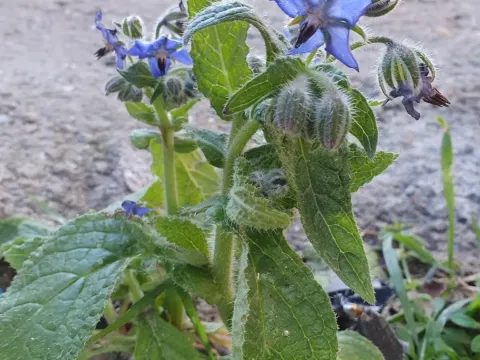
Borage
Borago L.
Borage (Borago officinalis) is a hardy annual herb known for its rapid growth and adaptability to various temperate climate conditions.
What the section contains

Borage
Seeds are typically sown directly into the garden soil as soon as the danger of severe frost has passed and the ground is workable.
Optimal sowing involves placing seeds at a depth of about 1–2 cm, with rows spaced roughly 30 to 45 cm apart to allow for lateral growth.
The plant germinates quickly, and seedlings can be thinned out once they reach a height of 5–10 cm to ensure proper air circulation.
Succession planting every few weeks throughout the spring and early summer allows for a continuous harvest of fresh, cucumber-flavored leaves.
Borage thrives in well-drained, fertile soils with a pH ranging from neutral to slightly alkaline for the best vegetative development.
It prefers full sun exposure but is versatile enough to tolerate partial shade, making it a great companion plant in diverse garden plots.
While the plant is somewhat drought-tolerant once established, regular irrigation during dry spells ensures the leaves remain tender and flavorful.
This herb is highly valued as a honey plant, attracting bees and beneficial pollinators to the garden, which helps improve the yield of nearby crops.
Borage performs best when grown in loose, deep soil, as its taproot can penetrate quite deep, effectively helping to aerate the garden bed.
Borage is generally considered a low-maintenance, pest-resistant plant due to its hairy foliage, which discourages many common garden pests.
However, during periods of high humidity and poor drainage, plants can occasionally fall victim to powdery mildew or other fungal leaf spots.
Slugs and snails may occasionally feed on young, succulent leaves during wet weather, requiring simple manual control or organic barriers.
Preventative measures include ensuring proper plant spacing and avoiding overhead irrigation that leaves water sitting on the leaves for extended periods.
Due to the fact that leaves and flowers are consumed, chemical pesticides are strongly discouraged in favor of natural cultural practices.
The leaves of the borage plant should be harvested before the plant begins to flower, as the texture becomes coarser and less desirable with age.
Beautiful, star-shaped blue flowers are edible and are typically harvested at peak bloom for use in salads, cocktails, or as decorative garnishes.
When harvesting for medicinal or culinary tea use, entire flowering tops are often cut and dried in a cool, shaded, and well-ventilated area.
The plant is a prolific self-seeder; if a harvest of seeds is desired, let the flowers fade and the seeds darken before collecting them.
Regularly harvesting the foliage stimulates the plant to produce new, fresh growth throughout the season until the first frost of autumn.