
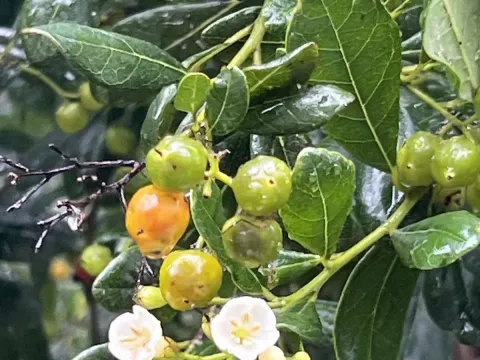
Bourreria
Bourreria
Bourreria is a genus of evergreen trees and shrubs belonging to the Boraginaceae family. These plants are native to the tropical and subtropical regions of the Americas, with a notable presence in the Caribbean and Florida ecosystems.
What the section contains
 Bourreria cassinifolia
Bourreria cassinifolia
Bourreria cassinifolia
 Bourreria cumanensis
Bourreria microphylla
Bourreria microphylla
Bourreria cumanensis
Bourreria cumanensis
Bourreria microphylla
Bourreria microphylla
 Bourreria ovata
Bourreria petiolaris
Bourreria petiolaris
Bourreria ovata
Bourreria ovata
Bourreria petiolaris
Bourreria petiolaris
 Bourreria radula
Bourreria radula
Bourreria radula
 Bourreria succulenta
Bourreria succulenta
Bourreria succulenta
 Bourreria virgata
Bourreria virgata
Bourreria virgata
Bourreria
The plant thrives in well-drained soils with a neutral to slightly alkaline pH level. Agronomists recommend ensuring proper soil aeration, as root health is critical to the overall development and longevity of the tree.
Climatic requirements are strict: Bourreria requires a frost-free environment to survive. It is a sun-loving plant that produces more vibrant blooms when exposed to direct light for most of the day, though it can tolerate partial shade in high-heat zones.
Agricultural techniques include moderate irrigation during the establishment phase and regular feeding with balanced fertilizers. Pruning is essential for maintaining a desirable shape and promoting dense foliage growth in nursery and landscape settings.
The economic use of the genus is primarily ornamental due to its attractive flowers and glossy leaves. Furthermore, the wood of certain species is prized in craft industries for its density, durability, and fine texture.
Root rot caused by stagnant water is the most significant threat to Bourreria. It is crucial to manage drainage systems to prevent the development of harmful fungal communities in the rhizosphere.
Scale insects and mealybugs are the most common pests affecting this culture. These insects feed on plant sap, which can lead to leaf yellowing and reduced vigor if the infestation is not managed promptly.
Aphids may occasionally target soft new shoots during the spring growth flush. Regular inspection and the application of insecticidal soaps are standard protocols for maintaining tree health.
Viral infections can spread through contaminated pruning shears. Always sanitize tools between individual plants to minimize the risk of transferring pathogens within the orchard or nursery area.
Environmental stress, particularly sudden temperature drops, can trigger leaf abscission. Providing wind protection and consistent moisture levels helps stabilize the plants during transition periods.