
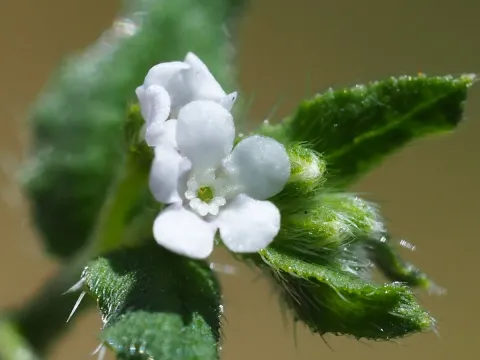
Bothriospermum
Bothriospermum
Bothriospermum is a genus of herbaceous plants belonging to the Boraginaceae family. While not a conventional agricultural crop, it is frequently encountered in agronomy as an invasive weed affecting various arable lands.
What the section contains


Bothriospermum
The plant thrives in well-drained, fertile soils, often colonizing disturbed habitats. It has a high ecological tolerance, allowing it to adapt to diverse soil types, ranging from loamy to slightly sandy textures.
Regarding climate, Bothriospermum prefers moderate temperatures and is well-adapted to regions with seasonal rainfall. It performs best in open, sunny environments where competition for light is minimized during the initial stages of growth.
Botanically, the plant is characterized by its branching stems and distinctively small, blue or white flowers arranged in loose racemes. Its reproductive strategy relies on the production of numerous seeds that ensure its persistence in soil seed banks.
For agricultural management, it is crucial to recognize the plant early in its life cycle. Its ability to grow rapidly makes it a significant competitor for resources in fields with newly emerged crops.
The primary agricultural threat posed by Bothriospermum is its role as an aggressive weed. It competes with primary crops for essential water, nutrients, and sunlight, potentially leading to yield reductions if left unchecked.
Insects such as aphids and various beetles are common pests associated with this genus, as they utilize the plant as a habitat, later potentially spreading to nearby cultivated vegetable or cereal crops.
Fungal diseases like powdery mildew are commonly observed on the foliage under high humidity. These pathogens can spread to other crops, making the management of field borders essential.
Effective control strategies include the use of chemical herbicides, mechanical weeding during early development, and strict adherence to crop rotation practices to reduce the seed bank in the soil.
To prevent infestation, farmers should prioritize the maintenance of clean equipment, as the seeds of Bothriospermum are easily transported between fields via machinery and soil debris.