
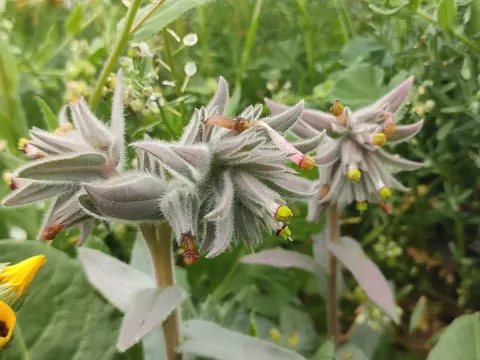
Nonea
Nonea
Nonea is typically sown in early spring, once soil temperatures reach 6–8 degrees Celsius. Timing is crucial to ensure that the soil retains enough moisture for effective seed germination and root establishment.
What the section contains
 Nonea calycina
Nonea calycina
Nonea calycina
 Nonea caspica
Nonea caspica
Nonea caspica
 Nonea echioides
Nonea melanocarpa
Nonea melanocarpa
Nonea echioides
Nonea echioides
Nonea melanocarpa
Nonea melanocarpa
 Nonea micrantha
Nonea obtusifolia
Nonea obtusifolia
Nonea micrantha
Nonea micrantha
Nonea obtusifolia
Nonea obtusifolia
 Nonea pallens
Nonea pallens
Nonea pallens
 Nonea philistaea
Nonea philistaea
Nonea philistaea
 Nonea pulla
Nonea pulla
Nonea pulla
 Nonea rosea
Nonea rosea
Nonea rosea
 Nonea rossica
Nonea rossica
Nonea rossica
 Yellow nonea
Nonea lutea
Yellow nonea
Nonea lutea
Nonea
In regions with milder winters, late autumn sowing is an option to promote earlier emergence in the spring. Seeds are sown at a shallow depth of 2–3 centimeters to maintain proper aeration and facilitate quick sprout emergence.
For large-scale cultivation, a row-spacing method with approximately 45 centimeters between rows is recommended. This spacing provides adequate room for root development and simplifies the mechanical maintenance of the crop.
Field preparation must include deep plowing and thorough surface leveling to ensure even seed distribution. A well-prepared seedbed is the foundation for a uniform crop stand and reduced competition from weeds.
Post-sowing rolling is highly recommended to improve soil-to-seed contact. This practice minimizes the risk of the topsoil drying out and helps stabilize the seedlings during their most sensitive developmental phase.
Nonea belongs to the Boraginaceae family and is known for its high adaptability to arid and semi-arid environments. The plant is remarkably resilient to drought conditions and fluctuations in seasonal temperatures.
The ideal soil profile for Nonea consists of light, well-draining structures, including sandy loams and fertile chernozems. The crop thrives in environments where waterlogging is not an issue, as it is highly susceptible to root decay in stagnant water.
As a heliophilic species, Nonea requires full sun exposure for optimal biomass production. Locations with significant shading or tree cover are not suitable for cultivation as they lead to stunted growth and lower yields.
The plant features an extensive root system capable of extracting nutrients from deeper soil horizons. While the plant is robust, supplemental phosphorous-potassium fertilization during the vegetative stage can significantly enhance productivity.
Its ecological plasticity allows it to grow in diverse conditions, ranging from open fields to rocky terrain. However, regular weeding remains an essential part of the agricultural process to ensure crop vigor.
The primary threats to Nonea crops are fungal diseases, which often occur under high humidity or poor ventilation. Powdery mildew can cause significant damage to the foliage, thereby reducing overall plant health.
Pests such as aphids and various weevils frequently target tender shoots during the peak growing season. Regular scouting and monitoring of the fields are necessary to detect infestations and implement control strategies.
Root rot is a critical concern, usually resulting from over-irrigation or inadequate drainage in heavier soil types. Managing soil moisture is the primary preventative measure against these harmful pathogens.
Weed interference is a significant challenge during the early stages of Nonea growth. Cultivating between rows helps mitigate the competition for light, water, and essential nutrients between the crop and opportunistic weeds.
Integrating biological control methods with good field hygiene ensures that pest populations remain below damaging thresholds without relying solely on chemical treatments.
The harvest of Nonea should coincide with the peak flowering phase, as this is when the concentration of beneficial active compounds is at its highest. Precision in timing directly dictates the market value of the crop.
Harvesting is performed by cutting the shoots at a specific height, ensuring that no soil or debris is collected along with the plant material. Mechanized harvesting is highly efficient for larger plantation areas.
Post-harvest, the plant material must be processed immediately through controlled drying to avoid spoilage. Utilizing well-ventilated areas or specialized drying chambers prevents the loss of quality through heat or humidity buildup.
Temperature control during the drying process is critical; levels should stay within the 40–50 degree range to preserve biological integrity. Excess heat can denature active compounds, resulting in lower quality yields.
Final storage involves packaging the dried product in moisture-resistant containers to maintain stability. Proper storage conditions are essential for preserving the quality of the product over the long term.