
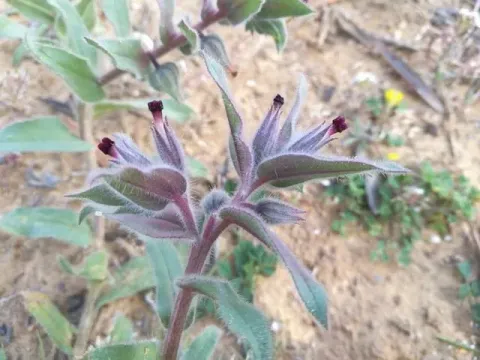
Nonnea vesicaria
Nonnea vesicaria
Nonnea vesicaria is an herbaceous plant usually sown during the spring period, as soon as the soil warms up to stable positive temperatures.
What the section contains
Nonnea vesicaria
The optimal time for sowing is mid-April, which allows the seeds to utilize spring soil moisture effectively for uniform germination.
In southern regions, winter sowing is possible, which stimulates earlier development of vegetative organs during the following season.
It is critical to observe the depth of seed placement, which should not exceed 2–3 centimeters to ensure optimal conditions for sprout emergence.
Sowing is carried out in rows with adequate spacing, promoting the development of robust aerial mass and abundant flowering.
The culture belongs to the Boraginaceae family and is characterized by high adaptability to xerophytic growing conditions.
The plant prefers open, well-lit areas, as shading significantly reduces the intensity of nectar production.
Nonnea is not demanding in terms of soil fertility, but it develops best on light sandy or chernozem soils with good drainage.
An important requirement is the absence of stagnant moisture, as excessive water can lead to the rotting of the plant's root system.
The plant possesses excellent drought resistance due to the pubescence of its stems and leaves, which protects it from excessive transpiration during heat.
The main economic use of Nonnea vesicaria is its value as a promising honey-producing plant for beekeeping support.
Nectar productivity depends on the climatic conditions of the season: in moderately warm weather with sufficient humidity, nectar yield increases.
The crop is highly valued by beekeepers for its long flowering period, providing a stable source of forage for insects over an extended duration.
Including this plant in forage mixtures can significantly improve the biological value and productivity of agricultural land.
In industrial cultivation for seed production, yield depends on sowing density and timely management of crop maintenance.
Nonnea vesicaria has high natural resistance to typical diseases affecting many members of the Boraginaceae family.
In case of poor agricultural practice or excessive humidity, root rot or powdery mildew may occur on the leaves.
Among pests, special attention should be paid to phytophagous insects that damage generative organs and limit seed development.
Weeds pose a major threat during the initial stages of crop development, so controlling field cleanliness is mandatory.
Strict spatial isolation and correct crop rotation help avoid the accumulation of pathogens and reduce the activity of harmful organisms.
Seed harvesting is performed during the full maturity phase when the fruits become hard and change their color to the characteristic species hue.
Careful mowing is required, considering the tendency of many species in this family to shatter and shed seeds upon ripening.
The most effective method is two-stage harvesting: plants are first mowed into windrows, and then collected and threshed after drying.
The obtained seed material requires immediate cleaning of impurities and drying to standard moisture levels after threshing.
Adhering to post-harvest processing technology ensures long-term seed viability and high quality for future sowing campaigns.