
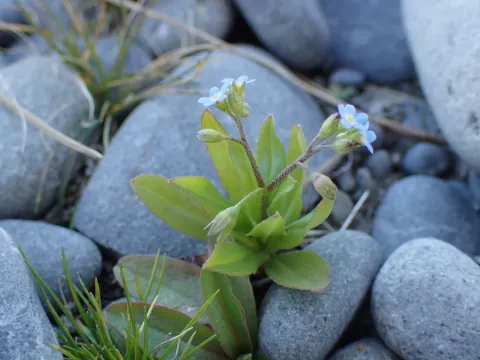
Tufted forget-me-not
Myosotis laxa
The tufted forget-me-not (Myosotis laxa) is a perennial herbaceous plant belonging to the Boraginaceae family. Unlike many other members of its genus, this species is specifically adapted to wet, riparian environments, making it a unique addition to specific agricultural and landscaping settings.
What the section contains
Tufted forget-me-not
The native distribution of this plant includes the Northern Hemisphere, where it thrives along stream banks, pond edges, and marshy meadows. It is highly dependent on moist conditions and requires a consistent water supply to maintain its vegetative vigor throughout the season.
Botanically, it is characterized by its prostrate or ascending stems that can root at the nodes, forming a dense turf-like cover. Its leaves are lanceolate, and the flowers, arranged in loose racemes, display the classic sky-blue petals that are synonymous with the forget-me-not genus.
For successful cultivation, the plant requires nutrient-rich, loamy, or organic-heavy soils with a neutral to slightly acidic pH. While it tolerates partial shade, it performs best in locations where the substrate remains consistently damp, mimicking its natural wetland habitat.
In terms of agricultural and horticultural utility, the tufted forget-me-not is primarily used for shoreline stabilization and decorative planting near water features. Its ability to create a dense mat of growth makes it an effective groundcover in areas susceptible to periodic inundation.
Fungal diseases, including powdery mildew and gray mold, are the primary threats to the health of the tufted forget-me-not, especially in environments with stagnant air and high humidity. Proper plant spacing is essential to ensure adequate airflow and reduce the incidence of infection.
Slugs and snails pose a significant risk, as they are attracted to the succulent foliage of the plant in wet garden beds. To mitigate this damage, growers often employ physical barriers, such as copper tape, or use environmentally friendly baits to manage pest populations.
Aphids can also infest the plant during the active growth phase, clustering on new shoots and flower buds. Control measures involve the use of insecticidal soaps or systemic treatments if the infestation threatens the overall ornamental quality of the planting.
Root rot may occur if the soil becomes anaerobic due to prolonged stagnation and high temperatures. Monitoring the drainage in the root zone is crucial to ensure that the plant thrives without suffering from waterlogged conditions that encourage fungal proliferation.
Routine inspection and timely maintenance are the cornerstones of protecting this crop. By maintaining optimal environmental conditions and promptly addressing any signs of pest activity, growers can preserve the plant's health and aesthetic appeal for multiple seasons.