
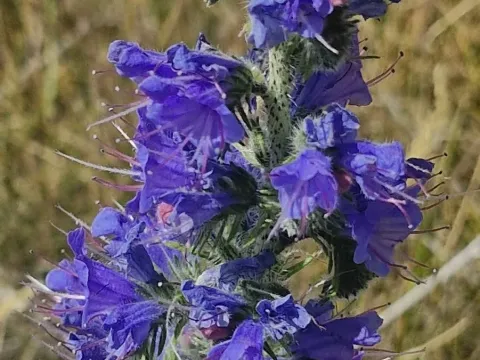
Viper's Bugloss
Echium
Viper's bugloss (Echium vulgare), a member of the Boraginaceae family, is predominantly a biennial plant. The optimal time for sowing is early spring or late autumn, allowing the seeds to undergo natural stratification in the soil.
What the section contains


Viper's Bugloss
When sowing in spring, it is crucial to use well-warmed soil, although viper's bugloss is known for its high cold tolerance. In arid climates, sowing should be done as early as possible to utilize stored moisture for rapid germination.
The seeding rate is approximately 4–6 kg per hectare for standard row planting. The sowing depth should not exceed 2–3 cm, as the seeds are small and may fail to emerge if planted too deep.
In the first year of life, the plant develops a rosette of basal leaves and a robust root system. This period is critical for establishing the potential for the following season, so maintaining weed-free fields is essential.
For seed production plots, it is recommended to maintain row spacing of 45–60 cm. This ensures better light penetration and nutrient access, which significantly boosts the intensity of flowering in the second year.
Viper's bugloss is a hardy crop capable of growing in poor, stony, and sandy soils where other honey plants fail. Its deep taproot makes it exceptionally drought-tolerant.
The plant prefers open, sunny locations. Growth is stunted in the shade, and nectar production decreases significantly, making site selection crucial for professional beekeeping operations.
The crop is not demanding regarding soil type, but it performs best in neutral to slightly alkaline soils. Waterlogged, heavy clay soils are detrimental to the root system and should be avoided.
Agricultural practices for this crop are minimal, focusing on weed control during the first year and maintaining optimal plant density. Fertilization on nutrient-poor soils can improve nectar yields.
Climatic requirements are modest, as the plant is highly winter-hardy and can withstand harsh frosts, making it suitable for cultivation across a wide range of climatic zones.
The primary economic value of viper's bugloss lies in its exceptional nectar productivity. Under favorable conditions, bees can collect up to 300–400 kg of high-quality honey per hectare per season.
Viper's bugloss honey is prized for its light color, delicate aroma, and slow crystallization. This high demand makes it a premium product, and the crop itself a valuable asset for commercial apiaries.
Seed yield is also significant, typically ranging from 300 to 600 kg per hectare. Harvesting must be timed correctly, as seeds are prone to shattering once the flower clusters are overripe.
The flowering period lasts between 30 and 45 days, starting in the second year. This extended blooming cycle provides honeybee colonies with a consistent source of nectar throughout the summer months.
While the plant can be used as fodder, the presence of stiff hairs on the stems and leaves makes it less palatable to livestock, confirming its status as primarily a honey-producing crop.
Viper's bugloss is highly resistant to many common agricultural diseases. However, high humidity can lead to powdery mildew infections, which may reduce the activity of the nectaries.
Pests such as various weevils and plant bugs can cause damage by feeding on flower buds. Infestations can significantly reduce nectar volumes and lower overall seed quality.
Weeds are the main competitors during the first year. Failure to cultivate between rows or weed manually can lead to overcrowding and sparse stands of viper's bugloss.
Crop rotation is recommended to prevent pest buildup. Avoid planting viper's bugloss in fields that previously hosted crops with shared pests and diseases.
Chemical pest control must be approached with extreme caution. As this is a primary honey crop, the use of pesticides during flowering is strictly prohibited to prevent bee mortality.
Harvesting for seeds takes place when the majority of flower clusters turn brown. It is crucial not to delay, as the seeds shatter very easily upon mechanical vibration.
Direct combining is the standard method, with the machinery adjusted for small-seeded crops. Harvesting is best performed in the cool morning or evening hours to minimize seed loss.
After threshing, seeds must be cleaned of debris and dried to a moisture content of no more than 12–14%. Improperly dried seeds lose viability quickly during storage.
To improve harvesting efficiency, some agronomists utilize desiccation to promote uniform ripening. This facilitates the combine process and reduces overall harvest losses.
Seeds should be stored in dry, well-ventilated areas. Given its high germination rate, quality seed material can maintain its vitality for 2–3 years under proper conditions.