
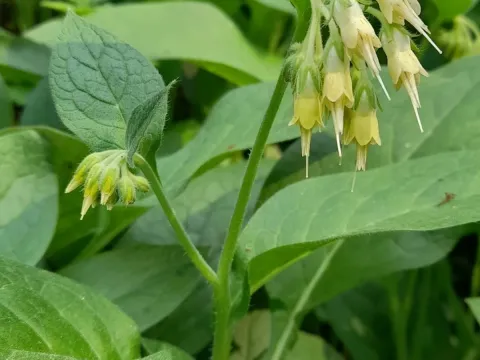
Tuberous Comfrey
Symphytum bulbosum
Tuberous Comfrey is a perennial herb belonging to the Boraginaceae family. It is distinguished from other comfrey species by its small tuberous swellings on the root system, which facilitate its vegetative propagation and survival during dormancy.
What the section contains
Tuberous Comfrey
The planting of this crop is typically performed by dividing the rhizomes during the autumn or early spring when the plant is not in its active vegetative phase. Seed propagation is less common due to the need for cold stratification to ensure uniform germination.
The plant thrives in loamy soils rich in organic matter that provide consistent moisture levels. Good soil structure is essential, as the plant develops a complex underground root system that requires enough space to expand effectively.
For agricultural cultivation, a planting density of approximately 40x40 or 50x50 centimeters is recommended. This spacing allows for proper airflow and simplifies weed management, which is crucial during the plant's initial establishment phase.
As an ephemeral species, Tuberous Comfrey begins its growth cycle very early in the spring. It completes its flowering and vegetative development by early summer, after which the above-ground foliage may partially wither to conserve energy.
Tuberous Comfrey is inherently a shade-tolerant plant, originating from woodland habitats and thickets. In agricultural settings, it performs best when cultivated in shaded or partially shaded areas to protect it from excessive heat.
It prefers a temperate climate with reliable humidity. The plant is remarkably frost-hardy and can survive harsh winter conditions, provided the root system remains stable and protected by soil or a light mulch layer.
Soil pH should ideally be near neutral. If the soil is excessively acidic, liming is recommended to improve nutrient availability and support the development of the tuberous roots, which are central to the plant's vigor.
Regular irrigation is vital during dry spells, especially throughout the flowering phase. Adequate water ensures the plant can store sufficient nutrients in its tubers for the subsequent year's growth and survival.
Adding organic compost or manure to the soil annually provides the necessary nutrient boost. This practice enhances soil fertility and encourages the production of the biomass required for both medicinal and horticultural purposes.
The primary agricultural value of Tuberous Comfrey lies in its medicinal properties, particularly its high content of allantoin. This compound is known for its wound-healing, anti-inflammatory, and regenerative qualities on tissues.
Tuberous Comfrey is also highly regarded as an early-season honey plant. By providing nectar during the early spring, it acts as a crucial food source for pollinators when other floral resources are still scarce.
Its foliage can be utilized to produce liquid organic fertilizers. The plant acts as a dynamic accumulator, drawing potassium and other minerals from deeper soil layers, which are then released as the leaves decompose.
The harvested roots are a source of raw material for the pharmaceutical and cosmetic industries. While production is usually on a small scale, it provides high-value herbal yields for specialized botanical farms.
In addition to industrial uses, it serves as an excellent ground cover, suppressing weeds and protecting the soil surface in orchards or shaded garden areas, which contributes to the overall health of the ecosystem.
The plant generally exhibits a high level of natural resistance to most pests due to the presence of alkaloids in its tissues. This makes it an ideal candidate for organic or low-input farming systems.
However, fungal issues such as powdery mildew can occur if the plant is grown in overcrowded or overly damp environments with poor air circulation. Proper spacing is the best preventative measure against such outbreaks.
Root rot is a potential risk in waterlogged soils. Ensuring good drainage is critical to prevent the tubers from decaying. If symptoms appear, reducing irrigation and improving soil porosity can often rectify the issue.
Slugs and snails may occasionally feed on the tender young leaves in the spring. Manual removal or natural barriers are usually sufficient to manage these pests without the need for chemical intervention.
Overall, Tuberous Comfrey is considered a low-maintenance crop. Once established, it requires very little external protection, provided that its basic site requirements are met from the start.
Root harvesting is best conducted in the autumn once the foliage has naturally died back. At this point, the plant has stored the maximum concentration of its beneficial phytochemicals within the root system.
Leaves for herbal preparations are harvested during the flowering period when they are most active. After harvesting, the material should be processed immediately to prevent degradation caused by high humidity or rot.
Drying should be carried out in a well-ventilated area away from direct sunlight, at temperatures not exceeding 40 degrees Celsius, to preserve the stability of the active medicinal compounds.
A portion of the harvested rhizomes should be set aside as planting stock. This ensures a sustainable supply and allows the farm to expand its cultivation area without needing to purchase new inputs.
When harvesting, the use of stainless steel tools is recommended to avoid chemical reactions with the plant's acidic sap, ensuring both the quality of the raw material and the longevity of the farming equipment.