
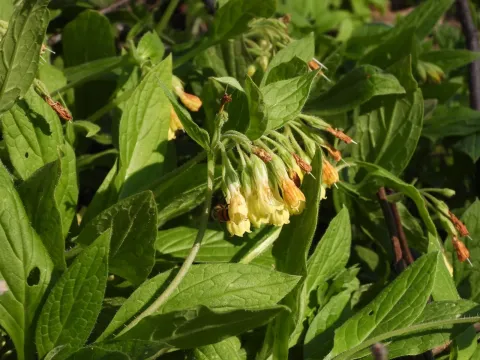
Tuberous comfrey
Symphytum tuberosum
Tuberous comfrey (Symphytum tuberosum) is a perennial herbaceous plant belonging to the Boraginaceae family. It is characterized by its distinctive tuber-like rootstocks, which allow the plant to store nutrients and survive dormant periods.
What the section contains
Tuberous comfrey
Originating from Europe and parts of Western Asia, this species is naturally adapted to moist, deciduous woodlands. In agricultural or garden settings, it thrives in shaded or semi-shaded areas where the soil remains consistently cool and damp.
The plant has specific soil requirements, preferring fertile, humus-rich, and well-draining soil. While it demands moisture, it will not tolerate waterlogged conditions, which can lead to the rotting of its fleshy roots during the winter months.
Agrotechnical management is relatively low-maintenance, making it a sustainable choice for ground cover in woodland gardens. Propagation is typically achieved through division of the rhizomes in early spring or autumn, though seeds can also be used.
Economically, tuberous comfrey serves as an important honey plant for bees in early spring. Its medicinal properties, rooted in its high allantoin content, are widely recognized, though care must be taken regarding internal use due to alkaloid content.
Powdery mildew is the most common fungal disease affecting the foliage of Tuberous comfrey. It appears as a white, dusty layer on the leaves, typically spreading during periods of warm weather and high humidity in dense plant colonies.
Slugs and snails are the primary pests that damage the young, tender leaves of the plant. Their activity is most intense during wet spring seasons, often requiring physical barriers or organic pest control methods to protect the garden bed.
Aphid infestations can occur, causing the leaves to curl and stunted growth. Regular inspection of the plant's undersides is recommended to address colonies before they cause significant damage to the plant's aesthetic and vigor.
Root rot, driven by stagnant water or fungal pathogens in the soil, poses a threat to the tuberous structures. Improving drainage and ensuring the site is not prone to flooding is the best preventative strategy against this issue.
While generally robust, the plant can occasionally succumb to various soil-borne diseases if the site is not rotated or if the soil lacks sufficient drainage. Maintaining soil health is crucial for long-term survival.