
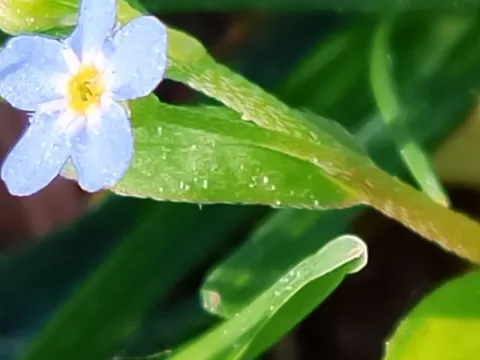
Weak forget-me-not
Myosotis debilis
The weak forget-me-not (Latin: Myosotis debilis) is a herbaceous perennial belonging to the Boraginaceae family. This species is naturally adapted to moist environments, frequently thriving in riparian zones and sheltered valleys where humidity levels remain consistently high throughout the growing season.
What the section contains
Weak forget-me-not
Botanically, the plant is distinguished by its slender, often prostrate stems and small, vibrant blue flowers featuring a yellow eye. The foliage is typically lanceolate or spatulate, covered in a fine pubescence that provides structural support and helps the plant retain moisture in varied environmental conditions.
To cultivate Myosotis debilis successfully, one must provide a site with partial shade and moisture-retentive, well-draining soil. While the plant requires ample hydration, it is essential to ensure that the root zone does not become waterlogged to prevent physiological disorders caused by hypoxia.
The agronomic management of this culture focuses on maintaining soil structure and avoiding extreme temperature fluctuations. In temperate climates, the plant establishes itself well in humus-rich soils, provided that the canopy density does not compete too aggressively for ground-level nutrients.
Its primary use is in ornamental horticulture, where it serves as a valuable groundcover for damp areas, rock gardens, and artificial water features. Its ability to tolerate low-light conditions makes it a versatile component for woodland-style garden layouts and shade-tolerant planting schemes.
Powdery mildew and various forms of gray mold represent the most significant pathological threats to this species. These infections are typically triggered by poor air circulation, making regular thinning and spacing critical for long-term health and disease prevention.
Slugs and snails frequently graze on the succulent foliage of the plant, especially during cool, damp spring weather. Implementing physical barriers or organic deterrents is the most effective strategy to protect young growth from significant damage during the early stages of development.
Aphid infestations can occur on young flower stalks and buds. Early detection is paramount; gardeners should monitor the plants closely and intervene with mild insecticidal soaps if population densities reach a level that threatens plant vigor.
Root rot occurs primarily due to poor drainage or excessive soil compaction. Providing a porous, nutrient-rich growing medium is the best preventative measure against soil-borne pathogens that thrive in stagnant, poorly aerated conditions.
Good garden hygiene, including the removal of dead plant material and proper seasonal maintenance, ensures that the plants remain resistant to most common environmental stressors and pests throughout their life cycle.