
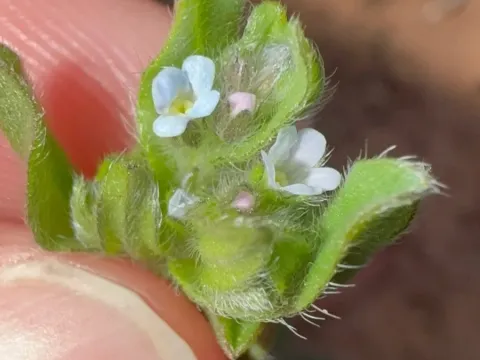
Western stickseed
Lappula occidentalis
Western stickseed (Lappula occidentalis) is an annual herb belonging to the Boraginaceae family. In an agricultural context, it is typically managed as a common weed rather than a cultivated crop due to its invasive nature.
What the section contains
Western stickseed
The plant thrives in open, sun-exposed areas with light, sandy or well-drained soils. It exhibits a high degree of adaptability, allowing it to survive in degraded lands and climates with limited precipitation.
Morphologically, it features an erect, branched stem covered with coarse hairs and narrow leaves. The key botanical feature is its nutlets, which possess hooked prickles that attach to animals and machinery, ensuring efficient seed dispersal.
Native primarily to North America, the plant has successfully naturalized in various temperate regions worldwide. Its presence in agricultural fields often indicates poor soil management or a lack of proper crop rotation practices.
Effective management requires strict adherence to agricultural practices, such as deep tillage for seedbed preparation and the use of competitive cover crops to suppress the germination of stickseed seedlings.
Western stickseed acts as an alternative host for several plant pathogens. It can harbor diseases that are potentially harmful to adjacent agricultural crops, thereby serving as a reservoir for infection throughout the growing season.
Various insects, such as aphids and specific beetles, utilize this plant as a breeding ground. During outbreaks, these pests migrate to nearby cultivated plants, leading to significant economic losses in yield and quality.
As a weed, it competes intensely for water, nitrogen, and other essential nutrients. This resource competition reduces the overall vigor of crops, particularly during the critical early development stages.
The hook-like prickles of the fruit pose a contamination issue for harvested grain. This requires additional cleaning processes, which increases the post-harvest operational costs for farmers.
Integrated weed management remains the most effective strategy. This includes chemical control using selective herbicides, combined with cultural methods like field hygiene and the timely removal of weeds before seeds reach maturity.