
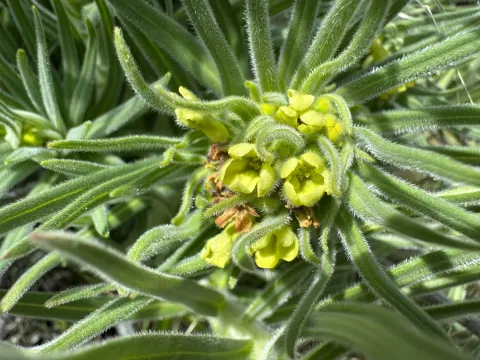
Western stoneseed
Lithospermum ruderale
Western stoneseed, a member of the Boraginaceae family, requires a well-prepared seedbed and should be sown in the early spring once soil temperatures reach 10-12 degrees Celsius.
What the section contains
Western stoneseed
Seed depth is critical for successful germination, and it is recommended to bury seeds no deeper than 2 centimeters to ensure access to essential oxygen.
The spacing between rows should be maintained at 30-50 centimeters, allowing for adequate plant development and easier inter-row mechanical cultivation.
Seeds of Lithospermum ruderale often benefit from a short period of cold stratification if sowing occurs in late autumn or early winter.
Proper density of seeding is vital to ensure that each plant has enough nutrients and water, particularly in the competitive early stages of growth.
This species thrives in well-drained, lime-rich, and stony soils, reflecting its natural habitat across the prairies and mountainous regions of North America.
Western stoneseed is highly drought-tolerant, making it an excellent candidate for agricultural production in arid zones or areas with limited precipitation.
Full sun exposure is mandatory for optimal growth; any significant shading will likely result in poor plant structure and lower phytochemical development.
The soil should have a neutral to slightly alkaline pH level to support the specific metabolic processes and nutrient uptake requirements of this plant.
Minimal fertilization is usually required, provided that the soil structure is adequate and there is proper drainage to prevent root saturation.
The yield of seeds and vegetative biomass can vary significantly based on soil fertility and the timing of moisture availability during the blooming phase.
Under optimal agronomic management, plants exhibit consistent annual growth patterns, typically reaching their full production potential in the second year.
Standard harvesting practices involve collecting seeds as they reach physiological maturity, preventing excessive shedding on the ground.
Yield stability is generally high due to the plant's natural adaptation to variable environmental stressors common in native prairie ecosystems.
Effective management includes careful irrigation planning during the flowering stage to maximize reproductive output and ensure high seed quality.
Root rot is the most common threat when the plant is grown in overly moist or poorly drained soils, often caused by pathogenic soil fungi.
Aphids can cause significant damage by feeding on the sap of tender new shoots, leading to stunted growth and potentially transmitting viral infections.
Powdery mildew may appear during periods of high humidity and stagnant air, creating a white coating on leaves that reduces the plant's vigor.
Weed competition during the seedling stage is a primary challenge, necessitating frequent monitoring and mechanical intervention to ensure crop survival.
Regular inspections and integrated pest management (IPM) strategies are recommended to maintain healthy stands and ensure sustainable production levels.