
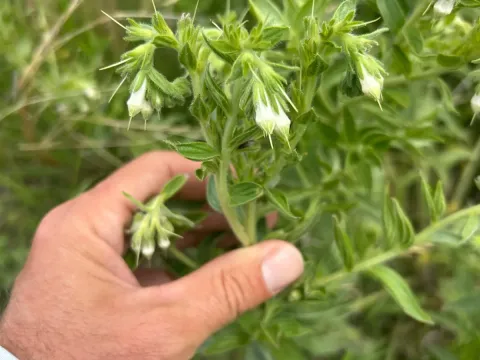
Western gromwell
Lithospermum occidentale
Western gromwell (Lithospermum occidentale) is a member of the Boraginaceae family, often cultivated for its unique phytochemical properties.
What the section contains
Western gromwell
Sowing typically occurs in the early spring once soil temperatures reach a consistent level sufficient for seed germination.
The seeds have a hard seed coat, which may require specific pre-sowing treatments or stratification to improve the overall germination rate.
Optimal sowing depth is generally set between 1 and 2 centimeters, depending on the moisture level and physical structure of the seedbed.
Row planting with spacing of up to 45 centimeters is recommended to facilitate effective weed control and ensure proper aeration for the growing plants.
This crop prefers well-drained, light-textured soils that are rich in calcium and organic matter for optimal growth and root development.
Western gromwell exhibits notable drought tolerance, making it a suitable candidate for cultivation in regions with variable precipitation patterns.
Soil pH should ideally be in the neutral to slightly alkaline range to support the efficient uptake of essential nutrients.
High light exposure is critical for this species, so fields should be located in open, sunny areas away from competitive shading from other vegetation.
The plant adapts well to moderate temperature fluctuations, though it requires a stable, warm growing season to reach its full productive potential.
The total yield of Western gromwell is highly dependent on the quality of field management and the timeliness of key agricultural operations.
Productivity generally peaks during the second or third year of growth as the plant develops a robust root system and mature foliage.
Targeted micronutrient fertilization has been shown to increase the concentration of bioactive compounds, significantly boosting the market value of the harvest.
Efficient harvesting techniques are essential to maintain the structural integrity of the harvested plant parts for industrial or medicinal processing.
Monitoring the growth stages allows producers to maximize the output of both vegetative matter and seeds throughout the life cycle of the crop.
Root rot caused by excess moisture remains the primary biological threat, particularly in fields with poor drainage or during abnormally wet seasons.
Various insect pests, such as aphids and specific beetles, can infest the foliage, necessitating regular monitoring and appropriate integrated pest management.
Weed competition is most detrimental during the seedling stage, making mechanical inter-row cultivation a necessary practice for field maintenance.
Disease prevention is best achieved through strict crop rotation protocols and by avoiding high-density sowing that restricts airflow between plants.
Fungal issues like powdery mildew can arise during periods of extreme temperature swings, requiring early detection and potential fungicide intervention.
Harvesting should be conducted when seeds reach full maturity, indicated by a consistent change in the color and hardness of the pericarp.
Post-harvest handling requires rapid drying to reach a moisture content of 10 to 12 percent, which is critical for long-term storage stability.
Mechanical harvesting equipment should be calibrated to minimize seed damage while efficiently gathering the plant material from the field.
Storing the product in a dry, climate-controlled environment prevents the degradation of bioactive components and protects against mold growth.
Final cleaning and sorting processes are necessary to ensure that the yield meets industrial quality standards for further commercial distribution.