
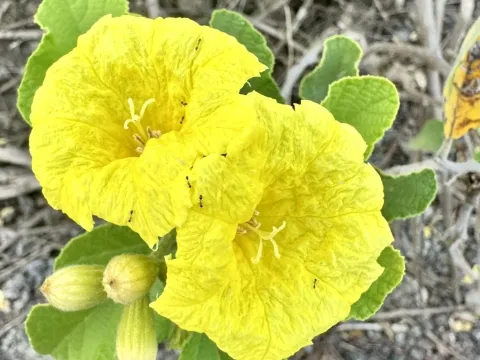
Yellow Cordia
Cordia lutea
Yellow Cordia (Cordia lutea) is a perennial shrub or small tree belonging to the Boraginaceae family. It is widely recognized for its vibrant yellow, funnel-shaped flowers and attractive foliage that thrive in tropical environments.
What the section contains
Yellow Cordia
This species is native to South America, particularly in regions like Ecuador and the Galapagos Islands. It is naturally adapted to dry tropical forests and coastal areas where sunlight is abundant throughout the year.
The plant demands full sun exposure to maintain its growth and health. It is highly drought-tolerant, making it an excellent choice for xeriscaping in regions where water conservation is a priority for agricultural projects.
Well-draining soil is essential for the cultivation of this species. It prefers sandy or loamy textures that prevent water stagnation, as the roots are sensitive to excessive moisture, which can cause severe decay.
Climatic requirements focus on warmth; the species cannot tolerate frost or prolonged cold periods. Optimal development occurs in temperatures ranging from 22 to 30 degrees Celsius, requiring a stable climate for consistent growth.
The primary utility of Yellow Cordia lies in ornamental landscaping. It is frequently utilized in urban planning, public gardens, and private estates to add vibrant colors to arid landscapes where other plants might fail.
Seed harvesting is conducted when the fruit matures into small drupes. The seeds are collected, cleaned, and processed to maintain viability for future propagation in greenhouses or nursery settings.
Proper pruning techniques are vital to manage the shrub's architecture. Regular maintenance pruning encourages denser foliage and increases the density of blossoms, which is critical for maximizing the ornamental impact.
Propagation is generally performed through seeds or softwood cuttings. When using seeds, high-quality substrate and consistent moisture levels during germination are key factors for achieving a high success rate.
Although it is primarily ornamental, local populations occasionally use the sturdy wood for small craft projects. This practice is minor compared to its primary role in enhancing biodiversity and aesthetic value in tropical regions.