
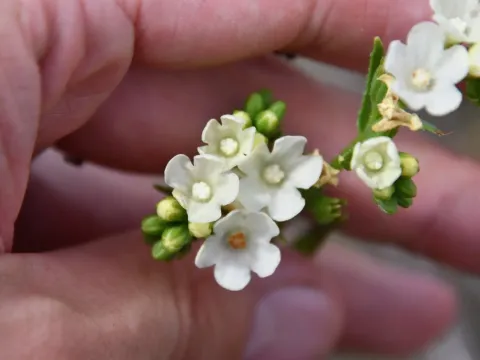
Yellow alkanet
Anchusa ochroleuca
Yellow alkanet (Anchusa ochroleuca), a member of the Boraginaceae family, is a perennial plant characterized by a strong taproot system. Sowing is typically scheduled for early spring, once the soil has reached sufficient temperatures to ensure rapid and uniform germination of seeds.
What the section contains
Yellow alkanet
Seeds should be planted at a shallow depth, ideally between 1 to 2 centimeters, ensuring they are well-covered with soil to retain moisture. Proper soil contact is critical during the initial stage to facilitate effective root establishment.
For agricultural purposes, wide-row sowing is the preferred method, as it provides enough space for the basal rosette to develop during the first year of growth. This spacing also simplifies maintenance tasks like mechanical weeding.
While autumn sowing may be attempted in regions with mild winter climates, early spring remains the gold standard for planting. This timing allows the plant to establish its root system before the onset of extreme summer heat or winter frost.
Field hygiene is essential; the seedbed must be cleared of competitive weeds, as yellow alkanet exhibits slow initial growth and can easily be outcompeted by aggressive weed species during its early development phase.
Yellow alkanet is known for its ecological resilience and adaptability. It thrives in open, sunny environments, as full exposure to sunlight is crucial for biomass production and the intensity of its flowering stage.
The plant is not particularly demanding regarding soil composition, though it performs best in sandy loam or well-drained loamy soils. It has an extreme intolerance for waterlogged conditions, which can lead to rapid root deterioration.
Thanks to its deep taproot, the plant shows significant drought tolerance, allowing it to survive in arid environments where other crops might fail. This makes it a potential candidate for sustainable forage programs in drier regions.
The ideal soil pH for this species is neutral to slightly alkaline. In acidic soil conditions, a prior application of lime is recommended to balance the pH and ensure the plant's metabolic processes function correctly.
General field maintenance requires only periodic cultivation of the inter-row spaces to eliminate competing vegetation. Supplemental fertilization is generally unnecessary unless the soil is severely depleted of nutrients.
The primary threats to yellow alkanet involve fungal diseases, which are often exacerbated by poor air circulation or excessive soil moisture. Root rots and various leaf spots are the most frequent health issues observed in these plants.
Pest pressure often comes from aphid infestations, which can accumulate on succulent flower stalks and young shoots. This leads to stunted growth and reduced seed set, significantly impacting the potential harvest.
Leaf-eating insects, including certain species of weevils, can also cause damage during hot and dry spells. These insects feed on the foliage, which reduces the plant's overall photosynthetic surface and weakens its vigor.
Integrated pest management strategies, such as crop rotation and maintaining adequate distance between rows, are the best ways to keep the population of pests and pathogens under control without relying on heavy chemical usage.
Proactive disease management relies on maintaining a well-ventilated crop canopy. By ensuring that moisture does not linger on the leaves or the soil surface, the likelihood of fungal outbreaks is drastically minimized.