
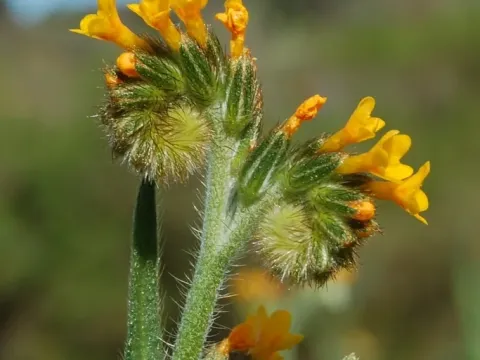
Amsinckia
Amsinckia
Amsinckia is a genus of annual plants in the Boraginaceae family. In an agricultural context, it is widely recognized as a problematic weed known for its competitive nature and negative impact on crop yields and livestock health.
What the section contains
 Amsinckia barbata
Amsinckia barbata
Amsinckia barbata
 Amsinckia carinata
Amsinckia carinata
Amsinckia carinata
 Amsinckia spectabilis
Amsinckia spectabilis
Amsinckia spectabilis
 Amsinckia vernicosa
Amsinckia vernicosa
Amsinckia vernicosa
 Bristly fiddleneck
Amsinckia tessellata
Bristly fiddleneck
Amsinckia tessellata
 Common Fiddleneck
Amsinckia lunaris
Common Fiddleneck
Amsinckia lunaris
 Douglas fiddleneck
Amsinckia douglasiana
Douglas fiddleneck
Amsinckia douglasiana
 Eastwood's fiddleneck
Amsinckia eastwoodiae
Eastwood's fiddleneck
Amsinckia eastwoodiae
 Large-flowered fiddleneck
Amsinckia grandiflora
Large-flowered fiddleneck
Amsinckia grandiflora
Amsinckia
Native to North and South America, Amsinckia has spread globally. It typically thrives in open, disturbed habitats, cultivated fields, and overgrazed pastures, where it establishes itself rapidly due to its high ecological adaptability.
The plant demonstrates significant tolerance to various environmental stressors. It performs well in diverse soil types, ranging from sandy to clay-heavy soils, and can successfully grow in arid conditions where other vegetation might struggle.
Botanically, Amsinckia is characterized by its coarse, stiff hairs covering the stems and leaves, which serve as a defense mechanism against herbivory. Its small flowers are arranged in curled, coiled inflorescences that straighten as they mature.
From an agronomic perspective, the plant is highly resilient. Its ability to extract nutrients and moisture efficiently allows it to colonize fields quickly, often outcompeting crop seedlings during the critical early stages of development.
The primary concern regarding Amsinckia is its toxicity to livestock. The plant contains pyrrolizidine alkaloids, which can cause chronic liver damage, weight loss, and in severe cases, mortality in cattle, horses, and sheep if consumed in forage.
As a competitor, it significantly impacts crop production. By rapidly developing a large canopy, the weed reduces light availability and nutrient uptake for cash crops, leading to marked reductions in final yield quality and quantity.
Amsinckia can also act as an alternative host for various crop pathogens and insects. It provides a refuge for pests during the off-season, which facilitates the transmission of diseases to subsequent seasonal crops in the field.
The persistence of Amsinckia is largely due to its prolific seed production. A single plant can produce thousands of seeds that can remain dormant in the soil for years, making long-term integrated weed management programs essential.
Effective control strategies require a combination of practices, including mechanical cultivation, crop rotation, and the application of pre- or post-emergence herbicides. Early detection and proactive management are crucial to preventing large-scale infestation.