
Regel's barberry
Berberis regeliana
Description
Growing requirements
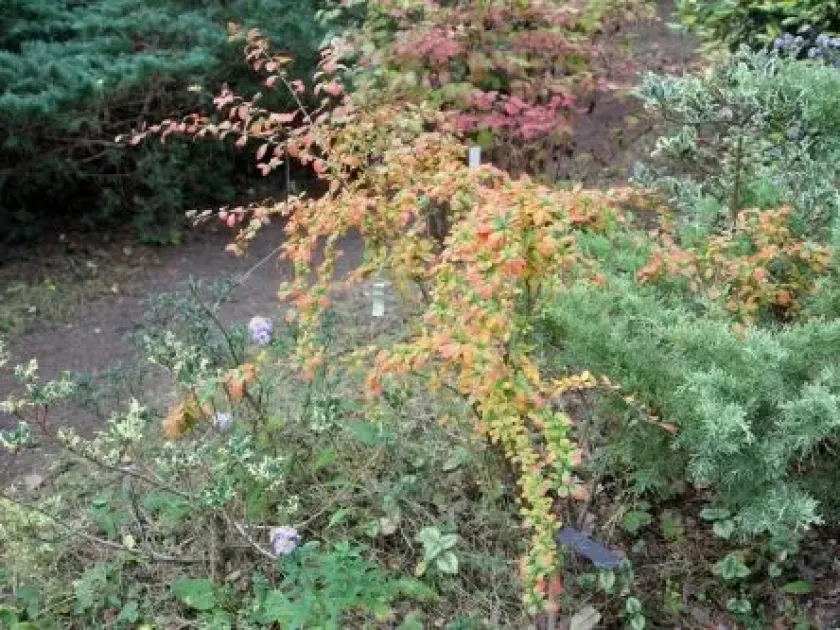
Regel's barberry (Berberis regeliana) belongs to the family Berberidaceae. It is a perennial deciduous shrub originating from the mountainous regions of Central Asia, known for its resilience and ornamental properties.
The plant thrives in well-lit areas with moderately fertile, well-drained soils. It shows high drought tolerance and can adapt to stony substrates, making it suitable for cultivation in regions with harsh continental climates.
Agricultural management requires regular pruning to shape the canopy and remove old shoots. Regel's barberry responds well to mineral fertilization during the spring growing season, which promotes strong foliage development.
The economic use of this crop includes the establishment of hedges, soil erosion control due to its extensive root system, and the processing of berries. The fruits are rich in Vitamin C and organic acids, highly valued in the pharmaceutical industry.
Successful cultivation requires strict moisture management in the initial years after planting. Although robust, mature plants perform better when protected from stagnant water, which can lead to root rot conditions.
Main diseases and pests
Common diseases affecting this species include powdery mildew and leaf rust, which often develop under high humidity. Maintaining airflow through proper pruning is the best preventive measure against these fungal issues.
Among pests, the barberry aphid and the flower looper are the primary threats. Systemic insecticides are recommended for control during the peak infestation periods to ensure the health of the shrub.