
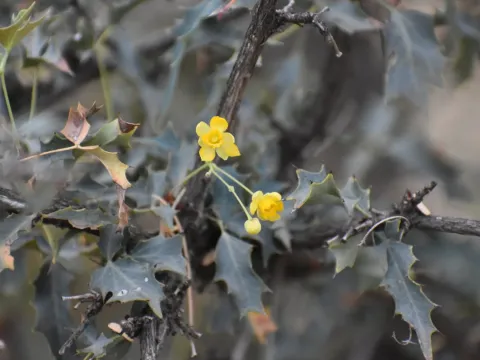
Red-berried barberry
Berberis haematocarpa
The Red-berried barberry (Berberis haematocarpa) is a prominent member of the Berberidaceae family. This shrub is characterized by its evergreen foliage and high tolerance to arid and semi-arid environments, making it a robust biological asset.
What the section contains
Red-berried barberry
Originating from the southwestern United States and northern Mexico, the plant has evolved to thrive in rocky soils and open, sun-drenched landscapes. It serves as an essential species for maintaining biodiversity in its native geographical range.
Regarding cultivation requirements, the species demands excellent drainage and a neutral to slightly alkaline soil pH. It is highly drought-tolerant, requiring minimal supplemental irrigation once the root system has been successfully established in the ground.
Climate adaptability is one of the key strengths of this species. It exhibits significant frost hardiness, allowing it to survive cold winters without structural damage, provided that the soil conditions remain well-drained and prevent waterlogging.
Its economic use is multifaceted, spanning from human consumption of its edible fruits to its role in landscape design and erosion control. The dense, spiny branches provide an effective natural barrier against wildlife and soil depletion.
Powdery mildew represents a primary threat to the plant's health, particularly in scenarios where planting density is too high, leading to reduced air circulation. Pruning for density control is the most effective preventative measure.
Aphid infestations, specifically the barberry aphid, can impact the growth rate of young branches. Monitoring the underside of the leaves is crucial for identifying early stages of an outbreak and applying appropriate horticultural control agents.
Root rot is often a result of over-irrigation or planting in compacted, heavy clay soils. Ensuring proper drainage is the most critical management step to mitigate the risk of pathogen accumulation in the root zone.
Rust diseases, common in the Berberis genus, can be a potential concern. Maintaining plant health through proper fertilization and avoiding overhead watering in high-humidity periods helps in reducing the susceptibility of the shrub to infections.
Overall, the Red-berried barberry is considered a resilient species with relatively low maintenance requirements. By implementing standard integrated pest management practices, growers can sustain healthy and productive shrub populations year-round.