
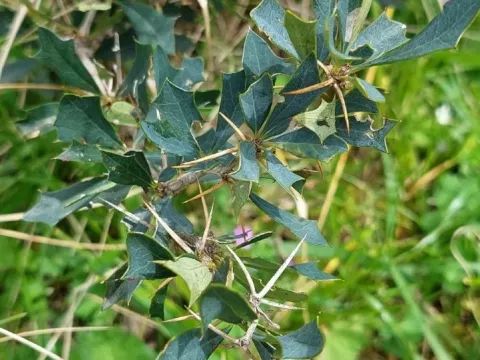
Ruscus-leaf barberry
Berberis ruscifolia
Ruscus-leaf barberry (Berberis ruscifolia) is an evergreen to semi-evergreen shrub belonging to the Berberidaceae family. Native to South America, particularly Argentina and Uruguay, it is highly valued for its rigid, ornamental foliage and distinct architectural form.
What the section contains
Ruscus-leaf barberry
The plant thrives in full sun, which is essential for maintaining its dense growth habit and typical leaf color. While it exhibits some shade tolerance, planting in full sunlight is recommended for optimal metabolic activity and overall health.
Regarding soil, this species prefers well-drained, fertile substrates with a neutral to slightly alkaline pH. Proper soil structure is critical as the root system does not tolerate waterlogged environments, which can lead to rapid decline in vigor.
It is relatively resilient to environmental stressors, including drought once established. During the initial growth stages, consistent irrigation is necessary, but as the plant matures, it demonstrates significant adaptation to various climate conditions.
The morphological features of this species include stiff, lanceolate leaves and sharp spines along the stems. These traits make it an excellent choice for protective hedges or ornamental garden features that require minimal maintenance.
Powdery mildew is the most common fungal issue for this species, appearing as white dust on foliage. It is generally managed through proper pruning to improve air circulation and by applying targeted fungicides during humid conditions.
Barberry aphids are frequent pests that feed on the soft, young stems of the plant. If left untreated, they can cause significant leaf distortion and general stress to the shrub, requiring the use of horticultural oils or systemic insecticides.
Rust fungi may manifest as orange, pustule-like spots on the underside of leaves. Prevention involves removing infected leaves immediately to stop the spread of spores, combined with maintaining a clean growing area.
Root rot is often associated with poor drainage and excessive water application. Avoiding over-irrigation and ensuring the planting hole has sufficient drainage material are key steps in preventing these pathogens from taking hold.
Integrated pest management strategies are advised to protect the shrub from infestation. Monitoring the plants regularly during the active growing season allows for early detection of potential threats before they cause substantial damage.