
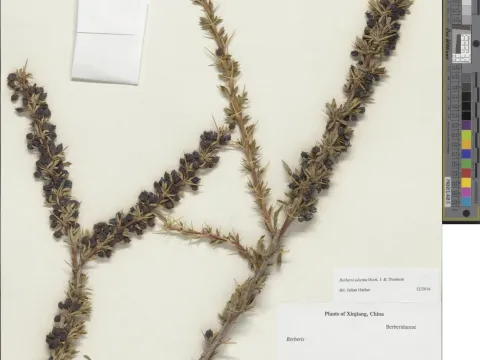
Berberis ulicina
Berberis ulicina
Berberis ulicina is a perennial shrub belonging to the Berberidaceae family. Native to Turkey, this species is well-adapted to arid and rocky habitats, making it an excellent candidate for xeriscaping and drought-prone garden areas.
What the section contains
Berberis ulicina
This plant thrives in full sun exposure. While it can tolerate partial shade, sunlight is essential for the plant to maintain its structural integrity and foliage color. Poor light conditions may result in leggy growth and increased susceptibility to diseases.
Regarding soil, Berberis ulicina requires well-drained substrates. It is not overly sensitive to soil pH, but it performs best in neutral to slightly alkaline, gravelly soils. Providing excellent drainage is crucial to prevent root rot, which is the most significant threat to this shrub.
The climate requirements include high heat tolerance and the ability to survive periods of minimal precipitation. Once the root system is established, the plant becomes largely self-sufficient, requiring little supplemental water compared to other ornamental species.
General care involves seasonal pruning to maintain shape and promote health. Since the plant is naturally thorny, pruning should be approached with caution using specialized protective equipment. Fertilizer application is recommended sparingly during early spring to support new growth.
Fungal diseases are the primary concern for Berberis ulicina, particularly powdery mildew. This pathogen typically manifests during periods of high humidity and poor airflow, covering leaves with a white, dusty-looking coating.
Pests such as aphids and flower moths can cause localized damage. Aphids often cluster on the undersides of leaves and on succulent young tips, extracting sap and causing the plant to lose vigor over time.
Integrated pest management is the most effective approach. This includes physical removal of heavily infested branches and the use of insecticidal soaps for early-stage aphid infestations before they reach critical population levels.
Air circulation is the best preventative measure against fungal outbreaks. Proper spacing during initial planting and selective thinning of the inner branches are essential cultural practices to prevent moisture accumulation.
Sanitation practices such as removing leaf litter and fallen debris from beneath the shrub in late autumn prevent the overwintering of fungal spores and pest larvae. These simple steps significantly reduce the need for chemical intervention.