
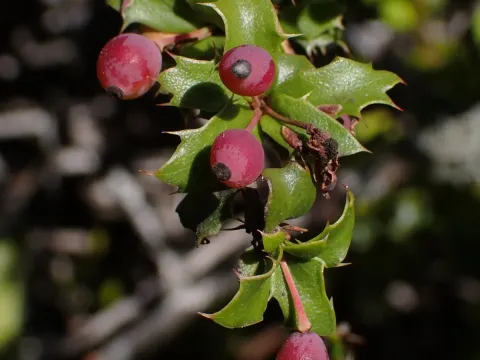
Hakea-leaved barberry
Berberis hakeoides
The Hakea-leaved barberry (Berberis hakeoides) belongs to the Berberidaceae family. It is an evergreen shrub originating from the temperate regions of Chile and Argentina, known for its unique structural appeal.
What the section contains
Hakea-leaved barberry
Botanically, the plant is characterized by its stiff, spiny, and leathery leaves that resemble those of the genus Hakea. This morphological adaptation allows the plant to thrive in rugged, open landscapes.
This crop requires a sunny position and well-drained soil. It is relatively drought-tolerant once established but needs consistent moisture during its initial development stages to build a strong root system.
Cultivation practices involve proper spacing to allow for adequate airflow. Given its natural adaptation, the plant performs best in neutral to slightly acidic soil, avoiding waterlogged conditions which are prone to causing root rot.
Economically and ornamentally, this shrub is highly valued for landscaping. It is frequently used in garden design for its resilience and ability to form dense, protective barriers that serve as effective wildlife habitats.
Common plant diseases include powdery mildew and rust. These fungal issues typically arise when there is high humidity and poor air circulation around the shrub, leading to leaf discoloration and loss.
Pest pressure is primarily driven by aphids and various species of defoliating caterpillars. These pests can rapidly affect the plant's health, particularly during the active spring growth period.
Integrated pest management involves monitoring for early signs of infestation and applying targeted insecticides when populations exceed economic thresholds.
To ensure plant health, it is essential to perform annual pruning to remove deadwood. This improves light penetration and reduces the surfaces available for fungal spores to colonize.
Regular sanitation of the soil area around the plant base is also advised to prevent the overwintering of pathogens. By adhering to these agronomic standards, the vitality of the shrubs can be maintained for years.