
Hawthorn barberry
Berberis crataegina
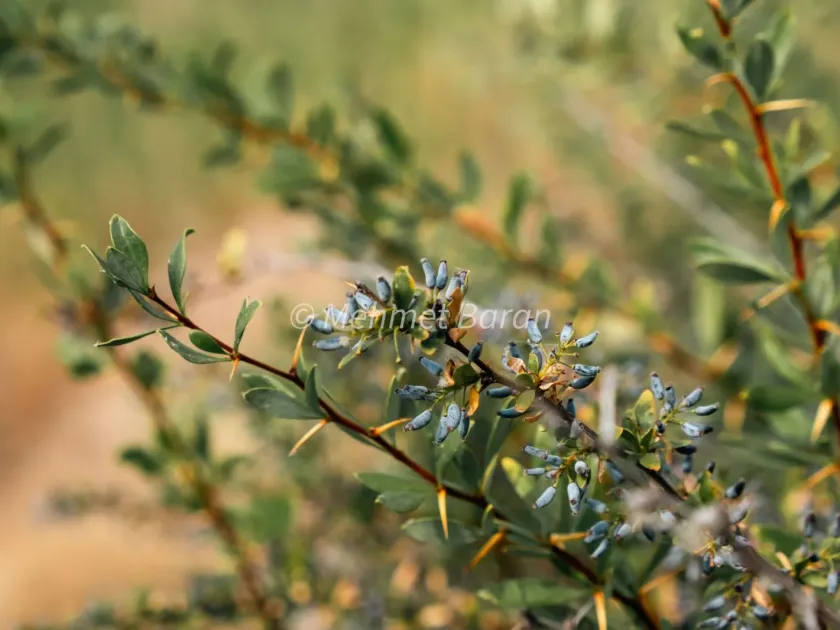
Description
Growing requirements
Hawthorn barberry (Berberis crataegina) is a deciduous shrub belonging to the Berberidaceae family, native to the arid mountainous regions of Asia Minor. It is recognized for its significant drought tolerance and ability to thrive in challenging soil conditions.
The plant requires full sun exposure to maintain optimal vigor and fruit production. It performs best in well-drained, alkaline, or neutral soils, showing high sensitivity to waterlogging, which can easily lead to root system decay.
Botanically, the species is characterized by its stiff, spiny branches and leathery leaves, which are adaptations to arid environments. The shrub reaches a moderate height and forms a dense structure, making it suitable for functional windbreaks and living fences.
Cultural practices involve minimal intervention once the plant is established. Annual pruning in the dormant season helps maintain the desired shape, encourages new growth, and improves air circulation within the canopy.
Fertilization with balanced mineral compounds in early spring supports healthy foliage development. Propagation is primarily achieved through seeds or stem cuttings, requiring careful preparation to ensure high germination or rooting rates.
Main diseases and pests
Rust diseases represent the primary pathological threat to Hawthorn barberry. These fungi manifest as orange pustules on foliage, potentially causing early leaf senescence and weakening the shrub over several growing seasons.
Powdery mildew often attacks during periods of high humidity or poor ventilation. Implementing appropriate spacing during plantation design and conducting thinning prunings are effective strategies to prevent the spread of fungal spores.
Aphid infestations are common during the spring, targeting new, tender shoots. Monitoring for these pests is essential, and horticultural soaps or systemic insecticides can be employed if threshold levels are exceeded.
The barberry moth and its larvae can cause significant damage by feeding on leaves. Integrated pest management, involving manual removal or targeted biological control, is recommended to minimize chemical usage.
Root rot is typically caused by poorly drained soils or excessive irrigation. Ensuring adequate soil drainage and preventing soil compaction are the best long-term measures for maintaining root health and overall plant vitality.