
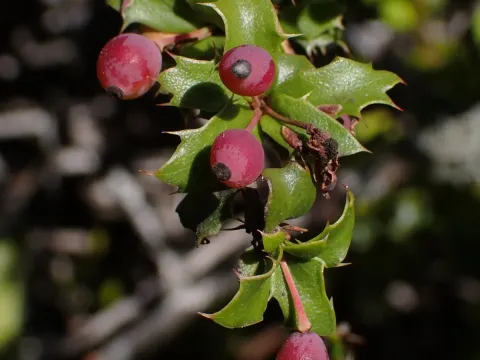
Berberis actinacantha
Berberis actinacantha
Berberis actinacantha is a distinct species of shrub belonging to the Berberidaceae family. Native to the mountainous regions of Chile, this plant has evolved to thrive in environments characterized by distinct dry seasons and well-drained, rocky substrates.
What the section contains
Berberis actinacantha
The plant is botanically recognized by its rigid, spine-like structures and dense branching habit. The leaves are typically leathery, an adaptation that reduces transpiration, making the species relatively drought-tolerant once established in a permanent location.
For agricultural and horticultural purposes, full sun exposure is essential to maintain the structural integrity and aesthetic value of the plant. Soils should be sandy or loamy with excellent permeability to prevent waterlogging, which the root system of this species is highly susceptible to.
Agronomic management requires minimal irrigation once the plants reach maturity, provided the rainfall is adequate. Periodic pruning is necessary to maintain shape, especially when grown as a hedge, and to encourage the renewal of older wood which tends to lose productivity over time.
The species serves various purposes, primarily as an ornamental plant in landscapes, providing security through its sharp spines. Additionally, it is used in ecological restoration projects due to its ability to stabilize thin soils in regions with similar Mediterranean-type climates.
The primary pathogenic threats to Berberis actinacantha involve fungal infections, specifically powdery mildew and root rot. These occur predominantly when the plant is kept in high humidity or poorly drained soil, which inhibits air circulation and promotes pathogen colonization.
Insect pests such as aphids and various species of caterpillars pose a recurring risk. Aphids gather on the underside of new leaves, extracting plant fluids, while lepidopteran larvae can cause significant defoliation if left uncontrolled during the early growth stages.
Sanitation practices are the first line of defense; removing debris and infected plant tissue significantly reduces the inoculum potential. Ensuring that each plant has enough space facilitates natural airflow, reducing the risk of fungal spread during wet seasons.
Chemical control measures should be applied only when necessary, using targeted insecticides for pest outbreaks and systemic fungicides for established fungal colonies. Integrated pest management (IPM) strategies are highly recommended for sustainable cultivation.
Vigilant monitoring of leaf condition and root zone health is vital. Early identification of discoloration or stunted growth allows for timely intervention, ensuring the long-term health and productivity of the shrub in both garden and nursery settings.