
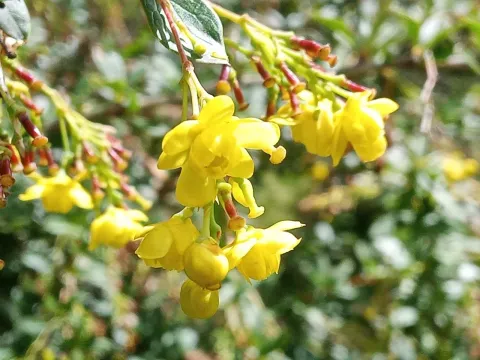
Berberis aristata
Berberis aristata
Berberis aristata is propagated primarily through seeds or softwood cuttings. Seeds should be sown in the autumn, directly into a well-prepared seedbed, to allow for natural cold stratification during the winter months.
What the section contains
Berberis aristata
If sowing in the spring, seeds must be stratified artificially for three to four months at temperatures between +3 and +5 degrees Celsius to break dormancy and ensure high germination rates.
Cuttings should be taken during the active growth period, typically in June. Softwood cuttings, approximately 10–15 cm long, provide the best results when treated with rooting hormones.
Propagation beds should be kept moist and shaded, with high relative humidity. Rooting usually occurs within 4–6 weeks, after which the young plants can be transplanted to nursery containers.
For orchard or field cultivation, seedlings should be spaced 1.5 to 2 meters apart. This spacing is essential for mechanical maintenance and to ensure sufficient light penetration to the inner canopy.
Berberis aristata, a member of the Berberidaceae family, originates from the Himalayan foothills. It thrives in open, sunny locations, which are necessary for both vigorous growth and fruit development.
The species prefers well-drained, fertile soils with a pH ranging from neutral to slightly alkaline. It is highly sensitive to waterlogged conditions, which can lead to root rot and other fungal diseases.
The plant is relatively hardy and adapted to temperate climates. However, it requires protection from harsh winds and extreme late spring frosts, which can damage emerging flower buds.
Watering management is crucial, especially during the fruit-setting stage. While established bushes are somewhat drought-tolerant, consistent moisture improves berry size and overall crop yield.
Regular fertilization with organic matter or balanced NPK fertilizers in early spring supports healthy growth. Mulching around the base helps retain moisture and suppress competitive weed growth.
The economic value of Berberis aristata lies in its berries, roots, and bark, which are rich in berberine. The plant begins to produce a noticeable yield 3–4 years after establishment.
Individual mature shrubs can produce between 3 and 6 kilograms of berries annually. High-density planting strategies in commercial settings can significantly improve overall farm productivity.
The root system is a significant source of raw material for the pharmaceutical industry. Harvesting roots generally involves a longer cycle, typically waiting at least 10 years to ensure high alkaloid content.
Yield stability is heavily influenced by pollination, which is primarily carried out by insects. Maintaining a healthy pollinator population near the planting area is recommended for maximum production.
Pruning is essential for yield maintenance. By removing old, non-productive wood every year, growers encourage the development of vigorous new shoots that bear larger quantities of fruit.
Berberis aristata is susceptible to several pests, most notably the barberry aphid. These insects cluster on tender shoots, causing stunted growth and potentially transmitting viral diseases.
Powdery mildew is a common fungal threat, particularly in humid or stagnant air environments. It manifests as a white, powdery coating on foliage, which significantly reduces the plant's photosynthetic efficiency.
Rust diseases are also prevalent, often appearing as yellowish-orange spots on the underside of leaves. Careful monitoring and the application of fungicides are necessary during high-risk periods.
Larvae of various moths, such as the barberry carpet moth, can cause localized damage to leaves. Integrated pest management, including manual removal or biological control, is preferred over broad-spectrum chemicals.
To minimize disease pressure, sanitation is key. Fallen leaves should be removed at the end of the season, and thinning the canopy ensures better air movement, discouraging fungal growth.
Berries are harvested when they reach full maturity, indicated by a deep blue or purple color. This usually occurs late in the season, just before the first frost in colder regions.
Due to the sharp, defensive thorns covering the branches, manual harvesting requires protective gear. Great care must be taken to pick berries without damaging the sensitive fruiting spurs for the next year.
Immediately after harvest, berries should be dried in controlled conditions. Temperatures should not exceed +50 degrees Celsius to prevent the degradation of thermolabile alkaloids and other medicinal compounds.
Proper storage is essential to maintain product quality. Dried berries and roots should be kept in airtight containers in a cool, dry, and dark environment to prevent oxidation and moisture damage.
Root harvesting is performed during the dormant season, either in late autumn or early spring. The roots are excavated, thoroughly cleaned of soil, cut into smaller pieces, and air-dried or kiln-dried for further processing.