
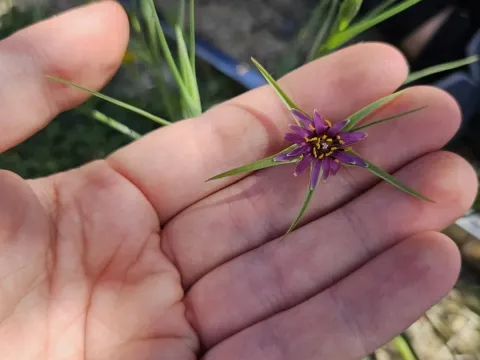
Narrowleaf salsify
Tragopogon angustifolius
Narrowleaf salsify (Tragopogon angustifolius) is a biennial herbaceous plant belonging to the Asteraceae family. For optimal root development, seeds should be sown in open fields in early spring as soon as the soil warms up to at least 8–10 degrees Celsius.
What the section contains
Narrowleaf salsify
Autumn sowing is also viable in regions with milder winters, allowing plants to undergo natural stratification and emerge earlier in the following season. Seeds are typically sown at a depth of 2–3 centimeters with row spacing set at 30–45 centimeters to ensure adequate growing space.
The plant exhibits high germination vigor, but consistent soil moisture is crucial during the first few weeks after emergence. Thinning the seedlings is necessary to maintain a distance of at least 15 centimeters between plants, preventing overcrowding and competition for nutrients.
This crop is known for its frost resistance, allowing young plants to withstand brief cold snaps without significant damage. Proper timing of the sowing phase is vital to ensure that the roots reach marketable size before entering the dormancy period.
With a biological growth cycle of roughly 120–150 days, planning the sowing schedule in accordance with local climatic conditions is essential to avoid premature bolting during the first year of growth.
Narrowleaf salsify thrives in well-drained, fertile loamy or sandy soils with a neutral pH level. It is important to avoid soils prone to waterlogging, as excessive moisture leads to root rot and diminished flavor quality.
The plant requires full sun exposure to maximize photosynthetic efficiency and root development. Shading can result in excessive leaf growth at the expense of the root, leading to lower yields and inferior market quality.
While the plant shows moderate drought tolerance due to its deep taproot, regular irrigation is required during the phase of active root development. Maintaining uniform moisture prevents the roots from becoming woody or bitter.
Deep cultivation of the soil, at least 25–30 centimeters, is required to prevent the roots from twisting or branching. Avoid applying fresh manure just before planting, as it encourages fork-shaped roots rather than a clean, single taproot.
The ideal temperature range for vegetative growth is 18–22 degrees Celsius. Extreme temperatures may trigger earlier flowering, which significantly reduces the culinary value of the harvest.
Crop yields for Narrowleaf salsify are directly influenced by soil quality, irrigation management, and proper spacing. Under good management, an individual root can reach a marketable weight of 150 to 300 grams.
On a commercial scale, yields can reach approximately 20–30 tons per hectare. The roots are characterized by good shelf life if harvested and stored correctly, maintaining their structural integrity over time.
The culinary applications for this crop are diverse, as the roots are known for their delicate, oyster-like flavor. They are highly valued in the health food sector due to their significant inulin content, making them a functional food ingredient.
Beyond the roots, young shoots and leaves are also edible and can be used in salads or sautéed dishes. This versatility makes Narrowleaf salsify an interesting niche crop for local markets and culinary enthusiasts.
Consistent maintenance, including timely weeding and inter-row cultivation, is necessary to prevent weed interference and maintain proper soil aeration for healthy root expansion.
The main threats to this crop are fungal diseases, particularly those that thrive in humid and poorly ventilated conditions. Powdery mildew and various types of root rot are among the most common issues observed in the field.
Soil-borne pests such as wireworms and white grubs can cause mechanical damage to the taproot, creating openings for secondary infections. Implementing crop rotation helps in managing these pest populations effectively.
Aphids can infest the foliage during hot and dry spells, weakening the plant and potentially stunting root growth. Monitoring the fields for early signs of infestation is a key component of integrated pest management.
Preventative strategies include maintaining proper water drainage, avoiding high-density plantings, and using clean, disease-free seed stock to minimize the risk of infection spreading through the field.
- Powdery mildew
- Root rot
- Wireworms
- Aphids
Harvesting usually takes place in autumn, typically between September and October, once the plants have accumulated significant carbohydrates in their roots. It is essential to complete the harvest before the first major ground freezes.
Roots should be carefully lifted using a pitchfork or specialized digging equipment to avoid skin damage. Any nicks or scratches on the root surface make them highly susceptible to decay during storage.
After harvesting, the roots must be cleaned of excess soil and the tops should be trimmed, leaving a small stem of 1–2 centimeters. Careful handling ensures maximum shelf life and product quality.
Roots should be stored in a cool, dark place with high humidity, such as a cellar or refrigerated storage, at temperatures between 0 and 2 degrees Celsius. Storing them in sand is an effective way to maintain moisture levels.
In regions with mild winters, the crop can be left in the ground and harvested as needed in early spring, provided that the roots are removed before the plant begins to bolt and produce a flower stalk.