
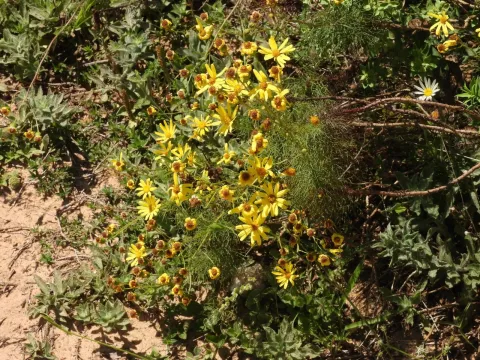
Narrow-lobed ragwort
Senecio leptolobus
Narrow-lobed ragwort (Senecio leptolobus) is a perennial herbaceous plant belonging to the Asteraceae family. In agricultural practices, the seeding process usually begins in the spring when the soil temperature consistently reaches 10–12 degrees Celsius.
What the section contains
Narrow-lobed ragwort
Preparation of the seedbed is a critical first step, ensuring that the soil is loose and free of large clods to facilitate seedling emergence. Seeding depth should be kept shallow, typically within the 1-2 centimeter range to ensure successful germination.
Using a row-seeding method is recommended to provide adequate space between individual plants. This spacing improves light penetration and airflow, which are essential for the healthy vegetative growth of the crop.
Post-emergence thinning is necessary to achieve the optimal plant density for the field. Proper thinning helps prevent inter-plant competition for nutrients and water, which is crucial for maximizing crop potential.
Late autumn sowing is also a viable option in many temperate regions. Planting before the soil freezes allows for natural stratification, enabling the seeds to break dormancy and sprout early in the following spring season.
The crop thrives in sunny, open locations with well-drained loamy or sandy soil. It is vital to avoid waterlogged sites, as the root system of Senecio leptolobus is sensitive to excessive moisture and poor aeration.
Soil pH should ideally be neutral or slightly alkaline. Regular soil testing is advised to ensure that essential macronutrients and micronutrients are available for optimal plant uptake throughout the growing cycle.
Organic fertilization, such as well-composted manure, should be applied during the autumn soil preparation phase. Supplemental mineral fertilizers high in nitrogen can be used during the spring to boost foliage production.
The temperature range between 18 and 25 degrees Celsius is ideal for active growth. While the plant is quite hardy, it appreciates protection from strong, drying winds in exposed agricultural fields.
Maintaining clear inter-row spaces through mechanical weeding is essential for moisture conservation and aeration. Consistent soil management practices will lead to more robust growth and improved overall yield quality.
Yield performance is highly dependent on effective crop management and soil nutrient availability. With proper attention, this crop can provide consistent harvests over several years due to its perennial nature.
The primary harvest period corresponds with the flowering stage, at which point the concentration of desired phytochemicals in the green matter is at its peak. Strategic timing of the harvest is crucial for product quality.
General productivity is enhanced by preventing weed encroachment and managing pests in a timely manner. Every field operation during the season contributes to the final biomass weight harvested per hectare.
For industrial applications, farmers should monitor the plant's development phases closely. Harvesting during dry, sunny conditions minimizes the risk of spoilage and simplifies the subsequent drying process.
Regular crop rotation and soil fertility replenishment are key strategies to maintain long-term plantation productivity. These practices ensure the crop remains resilient and healthy throughout its lifespan.
Narrow-lobed ragwort can be susceptible to fungal diseases like powdery mildew, especially if field drainage is poor. Improving ventilation and spacing are the best defensive measures against such infections.
Pests such as aphids may occasionally attack the soft shoots of the plant. Integrated pest management (IPM) practices, including the use of biological controls, are highly recommended to keep pest populations below economic damage thresholds.
Weed control is the most significant challenge in the first year of establishment. Keeping the plantation weed-free ensures the ragwort is not outcompeted for resources during its vulnerable initial growth stage.
A proactive approach to health management, including early identification of symptoms, prevents the spread of pathogens. Keeping the plantation site clean and removing infected plant parts is a standard sanitation procedure.
Healthy, vigorous plants possess a natural degree of resistance to common stressors. Investing in quality soil management is the primary way to minimize the need for external chemical inputs.
Harvesting is performed by mechanical or manual mowing of the stems during a period of dry weather. Dry conditions after cutting prevent fermentation and decay of the gathered plant material.
Transporting the green matter to the drying facility immediately after harvest is essential. The biomass should be kept out of direct sunlight and in well-ventilated areas to prevent quality loss.
Drying occurs in climate-controlled rooms or specialized drying racks at temperatures not exceeding 45 degrees Celsius. This carefully managed process preserves the plant's structural and chemical integrity.
Once the material is fully dried, it undergoes milling or processing to reach the target particle size. Proper moisture-proof packaging is required to ensure product longevity during storage and shipping.
Strict quality control at the harvest and post-harvest stages ensures that the final output meets the necessary industrial or commercial standards. Thoroughly processed and stored material guarantees long-term usability.