
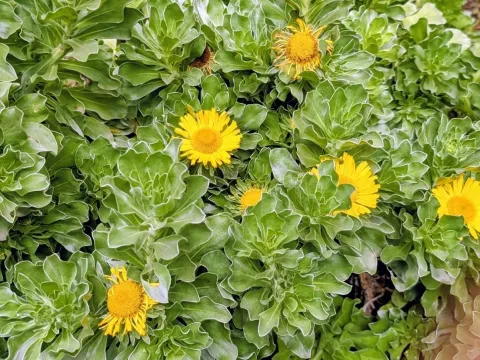
Nauplius sericeus
Nauplius sericeus
Nauplius sericeus is a perennial herb belonging to the Asteraceae family. This species is historically recognized for its distinct silvery-grey foliage, which is an evolutionary adaptation to arid environments.
What the section contains
Nauplius sericeus
Originating from the Canary Islands, the plant is naturally distributed across rocky and dry volcanic terrains, where it thrives in full exposure to solar radiation.
Agronomically, the crop requires extremely well-draining soil with a high content of coarse sand or gravel to prevent the saturation of the root zone, which the plant cannot tolerate.
Climate requirements for this species include high light intensity and moderate to warm temperatures, avoiding areas prone to frequent frost or high humidity levels.
Botany of the plant reveals a compact growth habit, with yellow daisy-like flower heads that appear seasonally, making it a distinctive specimen for specialized cultivation.
While not a traditional agricultural commodity for food production, Nauplius sericeus has significant value in ornamental horticulture and sustainable landscaping for arid regions.
Productivity in terms of biomass depends on optimal environmental variables, primarily the balance between light duration and the avoidance of excessive watering protocols.
Propagation is typically performed through seed or stem cuttings, which should be managed in a controlled environment until the root systems are sufficiently established.
Regular maintenance involves thinning and trimming spent flowers to encourage further vegetative development and to keep the canopy structure aerated.
The economic impact of this culture is mainly linked to the nursery sector, where it serves as a specialty plant for xeriscaping and sustainable garden design projects.
The primary threats to Nauplius sericeus under cultivation are pathogenic fungi, particularly those causing damping-off and root rot, which are exacerbated by poor air circulation.
Insect pests such as aphids and spider mites can colonize the plant, especially in greenhouse conditions where natural predator populations are lacking.
Integrated pest management strategies should focus on preventive measures, such as maintaining low humidity and ensuring that the substrate is not excessively moist.
Chemical control measures should be applied with caution, as the plant's hairy (pubescent) leaves can be sensitive to certain pesticide formulations and surfactants.
In addition to pests, weed competition must be strictly managed in the early stages of growth, as the plant is slow to establish and can easily be outcompeted by aggressive weeds.