
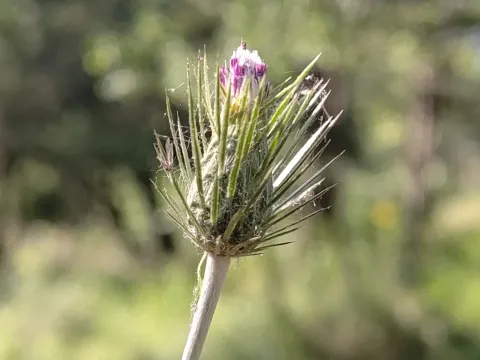
Needle thistle
Carduus acicularis
Needle thistle, belonging to the Asteraceae family, is a crop that requires careful seedbed preparation. Sowing is best performed in early spring once the soil temperature consistently reaches 10-12 degrees Celsius to ensure rapid germination.
What the section contains
Needle thistle
Seeds should be sown in rows spaced approximately 50-70 centimeters apart. This spacing is crucial for the plant’s robust growth habit and allows for efficient mechanical weed control during the early stages of vegetation.
The recommended sowing depth is shallow, around 1-2 centimeters. Covering the seeds with too much soil can inhibit emergence, as the seeds require sufficient light and oxygen to trigger the germination process.
Once seedlings emerge, thinning is recommended to maintain an optimal plant density of about 3-4 plants per square meter. This minimizes competition for nutrients and ensures the plants develop their characteristic structure.
In regions with mild winters, autumn sowing can also be considered to allow for earlier germination in the following spring, provided that the soil drainage is excellent to prevent rot.
This species is highly photophilous and demands full exposure to direct sunlight for optimal growth. Planting in shaded or partially shaded areas will lead to leggy, weak plants with significantly reduced flowering.
The plant thrives in well-drained, fertile soils. While it can adapt to various soil textures, it performs best in sandy loams where the root system can penetrate deeply without the risk of waterlogging.
Climate-wise, it is a hardy plant that demonstrates strong drought tolerance once established. However, consistent moisture during the first month after planting is beneficial for developing a strong root architecture.
Soil pH levels should be maintained in the neutral to slightly alkaline range. If the soil is acidic, agricultural lime should be applied during the preceding autumn to ensure nutrient availability.
Proper field management includes regular inter-row cultivation to keep the soil aerated and free from weeds that might compete for essential minerals and water resources during the summer months.
The primary threats to this crop include fungal infections such as powdery mildew, which can spread rapidly under high humidity and poor airflow conditions within the field canopy.
Pests such as aphids and thistle-specific weevils represent significant risks. These insects often target the developing flower buds, which can lead to crop loss if not managed through timely intervention.
Root rot caused by stagnant water or pathogen-rich soil can lead to sudden wilting. Maintaining excellent soil drainage and practicing a strict crop rotation schedule are the best preventive measures.
Integrated pest management (IPM) strategies, including biological controls and targeted mechanical removal, are preferred over broad-spectrum chemical applications to maintain crop safety.
- Monitor fields for early signs of leaf discoloration.
- Ensure adequate spacing to prevent humidity buildup.
- Implement a 3-year crop rotation to break pathogen cycles.