
Smooth Horsebrush
Tetradymia glabrata
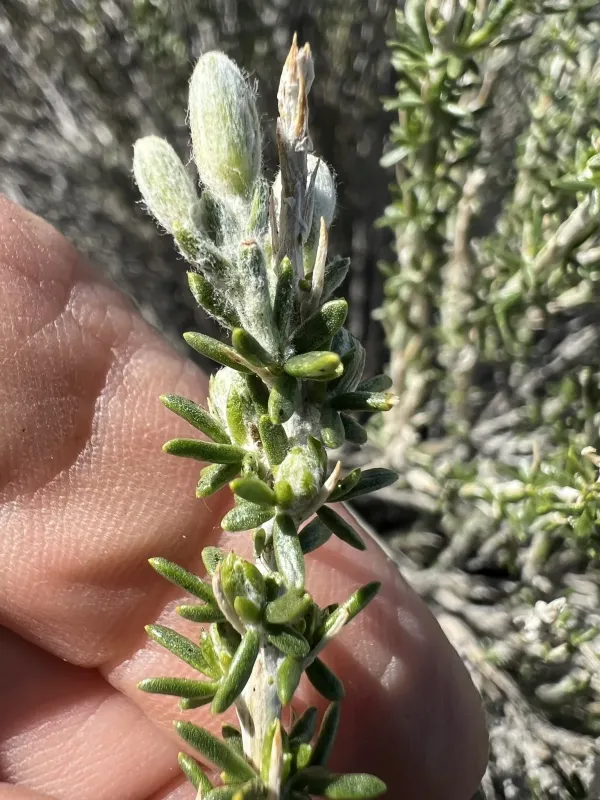
Description
Growing requirements
Smooth Horsebrush (Tetradymia glabrata) is a perennial shrub belonging to the Asteraceae family. It is a native species primarily found in the desert and semi-arid regions of the western United States, including states like Nevada, Utah, and California.
The plant is characterized by its smooth, hairless, bluish-green stems, from which its common name is derived. It develops a deep and extensive root system, which allows it to thrive in nutrient-poor desert soils where water availability is highly inconsistent.
Botanically, it is perfectly adapted to the harsh environmental conditions of high-desert basins. It is a highly resilient species that demonstrates significant tolerance to both extreme heat in the summer and sub-freezing temperatures during the winter months.
Regarding soil requirements, it favors well-drained, alkaline, or neutral substrates. It is commonly found in areas with sandy or gravelly soil, where it competes effectively for limited water resources. Good soil aeration is essential for its persistence.
In agricultural settings, it is viewed as a significant rangeland weed. Proper management and land improvement strategies are typically employed to reduce its presence, as it can crowd out more nutritious forage species in semi-arid grazing environments.
Main diseases and pests
The primary concern associated with Tetradymia glabrata is its toxicity to livestock. Sheep are particularly susceptible, as grazing on this plant can cause a metabolic condition known as photosensitization, which can be fatal if left untreated.
The toxicity is caused by furanosesquiterpenes present in the plant tissues. Once ingested, these compounds inflict severe damage to the liver, impairing its ability to eliminate chlorophyll by-products, which subsequently makes the skin highly sensitive to sunlight.
Natural enemies include a limited array of insect herbivores that have evolved to overcome the plant's chemical defenses. However, because the plant is toxic to most generalist herbivores, it often faces little grazing pressure, allowing it to expand its range unchecked.
Specific plant diseases are not extensively documented because the species is not of economic importance. Under certain conditions, environmental stress can make the plant susceptible to minor fungal infections that primarily affect the foliage during wet seasons.
Effective management involves identifying the plant during its early growth stages to implement control measures. Ranchers are advised to avoid grazing sheep on land infested with Smooth Horsebrush, particularly during the early spring when the plant is most toxic.