
Gray horsebrush
Tetradymia canescens
Description
Growing requirements
Tetradymia canescens, commonly known as gray horsebrush, is a perennial shrub belonging to the Asteraceae family. It is native to the western regions of North America, particularly thriving in arid and semi-arid environments like sagebrush steppes.
This species is highly adapted to harsh climates, characterized by limited annual precipitation and extreme temperature swings. It flourishes in well-drained, coarse-textured soils such as gravelly or sandy substrates, which prevent moisture accumulation near the roots.
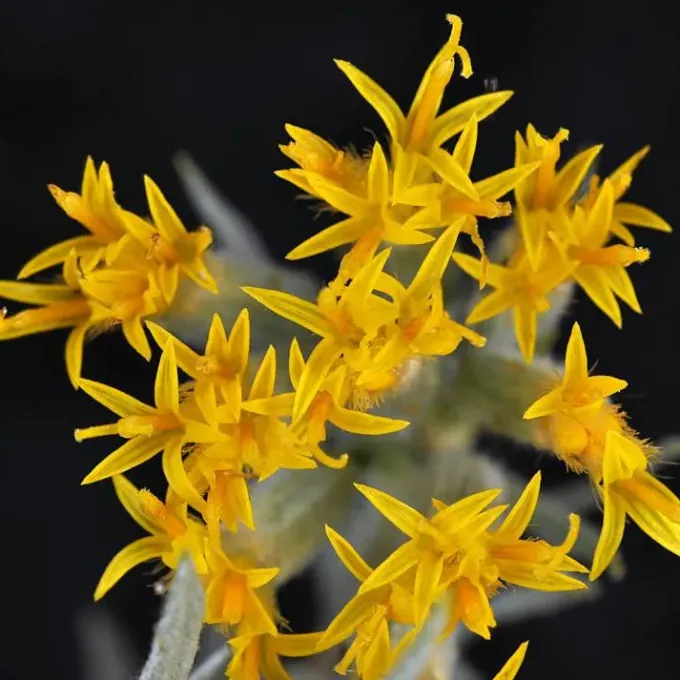
The plant is anatomically distinguished by its dense, silver-white pubescence covering the stems and foliage. This specialized feature acts as a protective layer, significantly reducing transpiration and reflecting intense ultraviolet radiation in sunny habitats.
Botanically, it typically reaches low heights and develops a deep, robust root system to access deep soil moisture reserves. The inflorescences consist of bright yellow flower heads that provide essential nectar resources for local pollinators during dry summer months.
In terms of land management, the plant is primarily valued for its role in stabilizing fragile, dry soils and preventing erosion. It is increasingly recognized in xeriscaping projects for its low water demand and distinct aesthetic properties.
Main diseases and pests
The primary horticultural threat to the gray horsebrush is fungal infection, specifically root rot, which typically occurs under conditions of excessive moisture or poor drainage. Proper site selection remains the best preventive measure.
Insect pests, including aphids and various species of spider mites, can affect the plant during periods of extreme heat, leading to premature wilting or disfigurement of the foliage if left unmanaged.
A significant agricultural concern is its toxicity to livestock. The plant contains specific alkaloids that can cause severe poisoning in sheep if consumed in large quantities, necessitating careful management of rangelands where this species is present.
Invasive weed encroachment poses a challenge to seedling establishment. Because of its relatively slow initial growth rate, the shrub often struggles to compete with aggressive grasses or invasive species in the early development phase.
Environmental stressors such as unseasonable frost or extreme herbivory by wild ungulates can also impact population density. Effective monitoring ensures that the shrubs maintain health and contribute effectively to the surrounding ecosystem.