
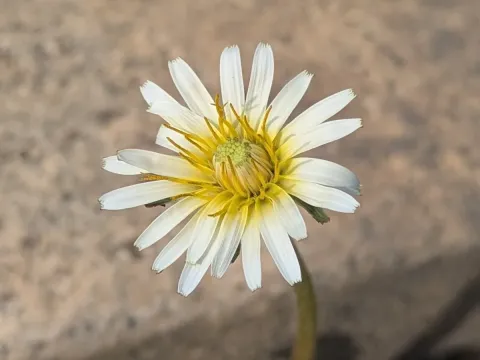
White dandelion
Taraxacum albidum
White dandelion (Taraxacum albidum) is a perennial herbaceous plant belonging to the Asteraceae family. Native to East Asia, it is distinct from common dandelions due to its white or cream-colored florets, which are highly valued in horticultural and pharmaceutical applications.
What the section contains
White dandelion
Sowing typically occurs in early spring as soon as the danger of deep ground frost has passed. For large-scale production, drilling seeds in rows with appropriate spacing is recommended to ensure even distribution and ease of mechanical weed control during the establishment phase.
This crop thrives in sunny locations with well-drained, sandy loam soils. It is relatively adaptable to varying climate conditions but requires consistent soil moisture during the germination and initial growth stages to ensure a strong root system development.
Soil nutrient management is crucial for the white dandelion. It performs best in soils with a neutral pH, though it can tolerate slightly acidic conditions. Adequate potassium levels in the soil are essential for promoting healthy root growth, which is the primary harvest objective.
The economic value of this crop is primarily derived from its roots and foliage, which are utilized in various therapeutic and cosmetic formulations. With proper management, the crop yields consistent biomass suitable for high-value botanical processing and extract production.
To maximize yields, producers should focus on soil structure management to prevent compaction. Regular inter-row cultivation helps in preserving soil moisture and maintaining optimal growing conditions throughout the peak vegetative period of the crop cycle.
Disease management focuses mainly on preventing fungal issues such as powdery mildew, which can be prevalent in humid climates with poor air circulation. Proper spacing and site selection for maximum sunlight exposure are the most effective preventive agronomic strategies.
Pest challenges include root-feeding insects and various aphids that target young leaves. Monitoring programs are essential to detect infestations early, and growers should employ integrated pest management (IPM) practices to minimize chemical inputs while maintaining crop health.
Harvesting strategies vary based on whether the leaves or the roots are the intended end-product. Leaves are usually gathered prior to full bloom, while roots are harvested after the growing season has concluded to ensure the highest concentration of phytochemicals.