
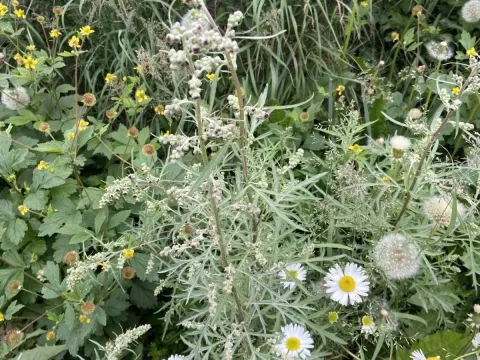
White-leaf wormwood
Artemisia leucophylla
White-leaf wormwood (Artemisia leucophylla) is a perennial herbaceous plant belonging to the Asteraceae family. Native to the vast regions of East Asia, including Mongolia and the Russian Far East, this plant has adapted to diverse environments ranging from steppe grasslands to mountainous rocky terrains.
What the section contains
White-leaf wormwood
For cultivation, seeds are sown in early spring when the soil starts to warm up, generally reaching temperatures above 5 degrees Celsius. Due to the small size of the seeds, they should be distributed on the soil surface and lightly pressed or covered with a very thin layer of sand to maintain contact with moisture.
The preparation of the planting site is essential, focusing on the removal of perennial weeds that can easily outcompete the young wormwood seedlings. A well-tilled, clean seedbed ensures that the plant develops a robust root system during the first season of growth, which is critical for its perennial survival.
Propagation can also be effectively achieved through division of established clumps, especially in older plantations. This method allows for faster establishment of new areas and maintains the genetic consistency of the specific variety being cultivated for its pharmacological properties.
The spacing between plants should be optimized to allow for good airflow and light penetration, which helps in reducing the humidity around the base of the plant. A typical layout involves rows spaced 50-60 centimeters apart to facilitate mechanical weeding and efficient management during the season.
Artemisia leucophylla is a highly resilient xerophyte, meaning it thrives in dry conditions. It has a remarkable ability to extract water from poor, rocky, or sandy soils, making it an excellent candidate for marginal lands where other crops might struggle to survive.
Sunlight is the most critical requirement for this species. To achieve the best concentration of essential oils and bioactive secondary metabolites, the plants must be situated in full sun. Shade negatively affects the plant's growth habit and results in lower-quality harvested biomass.
The soil should have a neutral or slightly alkaline pH and, most importantly, excellent drainage. While the plant is drought-tolerant, it is highly susceptible to root rot if water stagnates in the root zone for prolonged periods, especially in heavy clay soils.
Fertilization should be kept to a minimum. Over-application of nitrogenous fertilizers promotes rapid, succulent growth that is less rich in the desired aromatic oils and makes the plants more attractive to pests. Occasional phosphorus and potassium application can help in strengthening the plant's structural integrity.
The species demonstrates high tolerance to extreme temperatures. It survives deep winter freezes and intense summer heat without special protection. This hardiness makes it an ideal low-input crop for farmers located in continental climates with significant seasonal temperature variations.
White-leaf wormwood is generally resistant to many common agricultural diseases due to the presence of bitter compounds in its tissues. However, in poorly drained or overly dense plantations, it may be susceptible to various fungal pathogens that cause root and stem rot.
Aphids can occasionally be a concern, particularly on young, tender leaves during the early stages of the growing season. While the plant's natural oils provide some protection, severe infestations may require integrated pest management approaches, avoiding harsh chemicals to maintain the medicinal quality of the herb.
Weed competition is the primary threat to yield during the first year of establishment. If weeds are allowed to grow around the young wormwood, they can reduce biomass production significantly and even cause the plant to die off due to lack of light and nutrient resources.
Excessive humidity during the drying phase is a major threat to the quality of the harvested product. If the harvested material is not dried under proper airflow, mold growth can quickly develop, rendering the entire batch unfit for medicinal or industrial use.
Occasional outbreaks of leaf-eating larvae may occur, but these are rarely of economic significance in healthy, well-managed fields. Maintaining soil health and proper plant spacing remains the most effective strategy for preventing and managing these biological threats.
The harvest timing is dictated by the flowering phenology of the plant. The cutting of the aerial parts should occur at the peak of the flowering period, when the accumulation of essential oils, flavonoids, and sesquiterpene lactones is at its highest level of concentration.
Harvesting is performed by mowing the plants at a height of approximately 15 centimeters above the ground. This leaves enough of the lower stem to support rapid regrowth for the next season, ensuring the long-term productivity of the plantation over several years.
Immediate post-harvest processing is mandatory to preserve the active ingredients. The harvested biomass must be spread in thin layers in a shaded, ventilated area to dry slowly. Drying temperatures should not exceed 45 degrees Celsius to prevent the loss of volatile compounds.
Once dry, the raw material is sorted to remove debris and then processed according to its final use. Whether destined for pharmaceutical extractors or herbal tea manufacturers, the quality control process focuses on the color and aroma of the dried leaves and flowering tops.
The utilization of this crop is multifaceted, spanning from traditional medicine to modern applications in cosmetics and food supplements. Its unique chemical profile makes it a valuable industrial resource for various bio-based products produced globally.