
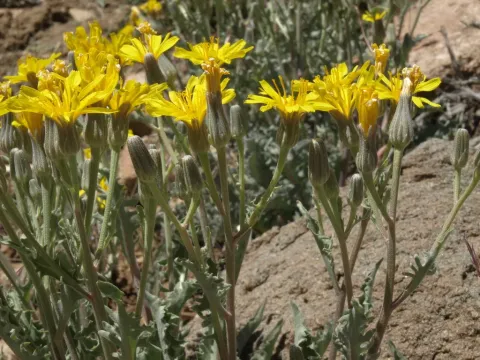
Western hawksbeard
Crepis occidentalis
Western hawksbeard (Crepis occidentalis) is a perennial herbaceous plant belonging to the Asteraceae family. It is native to the western regions of North America, typically found in arid grasslands, scrublands, and open rocky slopes where it thrives in diverse soil types.
What the section contains
Western hawksbeard
The plant is characterized by a deep taproot, which allows it to access water sources deep within the soil profile. This physiological trait makes the species highly drought-tolerant, an essential quality for surviving in environments with irregular precipitation patterns.
Western hawksbeard prefers well-drained, sandy, or gravelly soils. It does not tolerate waterlogged conditions, which can lead to root rot and poor development. Full sun exposure is critical for the plant to achieve optimal growth and prolific flowering.
Botanically, the plant features a basal rosette of gray-green, pubescent leaves that provide a distinct texture. The flowering stems emerge in late spring to summer, producing heads of yellow flowers that are attractive to local pollinators, including bees and butterflies.
In an agricultural context, it serves as a component of native plant communities. While not widely cultivated as a commercial crop, its potential for restoration ecology and its role in maintaining soil integrity in rangelands are increasingly recognized by land managers.
Common fungal diseases affecting this species include powdery mildew, which tends to develop during periods of high humidity or poor air circulation. These infections manifest as white, dust-like patches on the leaf surfaces.
Insect pests such as aphids are frequently observed, particularly on young leaf tissues. Additionally, certain types of beetles may feed on the reproductive parts of the plant, potentially reducing the overall seed yield during a growing season.
Nematode infestations can occasionally affect the root system, although this is more common in disturbed soils. Maintaining healthy soil biology is the primary strategy to mitigate such threats in wild or semi-cultivated populations.
Preventative cultural practices include ensuring proper plant spacing and avoiding excessive irrigation, which reduces the risk of fungal proliferation. Maintaining soil health is crucial to support the plant's natural defense mechanisms.
In most natural settings, the plant requires little to no chemical intervention. Monitoring for early signs of pest outbreaks during the spring months is usually sufficient to manage any potential population decline.