
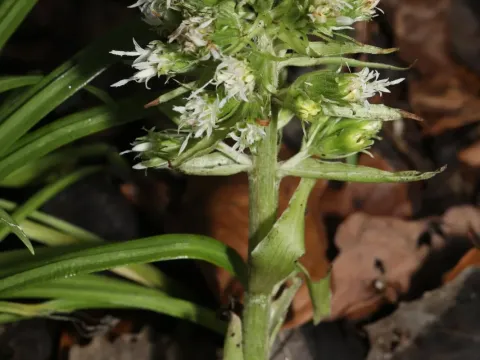
White butterbur
Petasites albus
White butterbur (Petasites albus) is a perennial rhizomatous herb belonging to the Asteraceae family. Known for its rapid growth, this species thrives in cool, shaded, and moist environments often found in riparian zones or woodlands.
What the section contains
White butterbur
The plant demands high levels of soil moisture and prefers rich, loamy, or slightly clayey soils. In agricultural settings, irrigation management is paramount, as the large leaves transpire significant amounts of water, leading to rapid wilting if the root zone dries out.
Optimal site selection includes partial shade to full shade exposure. While it is hardy in temperate climates, exposure to intense midday sun during the summer can damage the foliage and stunt the development of the rhizomes, which are often the primary harvest component.
Agricultural management involves monitoring soil health and ensuring sufficient organic matter. Because the plant spreads aggressively via rhizomes, cultivators must implement containment strategies to ensure that the crop does not encroach upon surrounding fields.
Economically, Petasites albus is valued for its pharmacological compounds. It has a long history of use in herbal medicine, primarily for its antispasmodic and anti-inflammatory properties, making it an interesting niche crop for medicinal herb producers.
Fungal diseases such as powdery mildew represent a major threat to leaf health. These pathogens thrive in the humid, low-airflow environments that are also ideal for the butterbur, requiring careful spacing and monitoring during the growing season.
Gastropod pests, specifically slugs and snails, are notorious for consuming the large leaves of white butterbur. Their activity can be particularly damaging to young plants and during wet weather cycles, necessitating the use of barrier controls or baits.
Aphid infestations are frequently observed on the flower stalks and the underside of leaves. These pests weaken the plant and can serve as vectors for various viral diseases, making early intervention with bio-pesticides or physical removal essential.
Root rot and crown decay occur when soil aeration is insufficient, particularly in heavy, waterlogged soils. Ensuring good drainage is a critical prerequisite for the successful cultivation of this species in a commercial environment.
Maintaining a clean field by removing dead foliage at the end of the season helps to disrupt the life cycles of most pests and pathogens. This sanitation process is a fundamental aspect of integrated pest management for Petasites albus.