
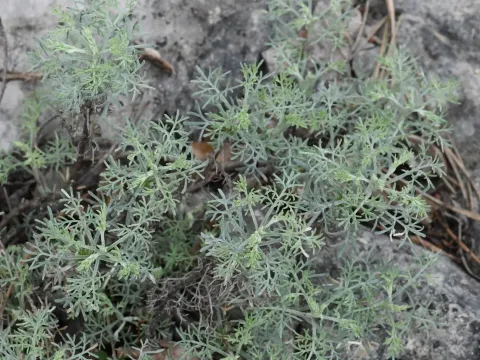
White wormwood
Artemisia alba
Sowing of white wormwood (Artemisia alba) is primarily carried out in the spring as soon as the soil warms up to 10-12 degrees Celsius. In temperate climates, late-autumn sowing is also possible, which ensures earlier and more uniform emergence at the beginning of the next season.
What the section contains
White wormwood
The seeds of this crop have high viability but are small in size, so they are sown on the surface or at a depth of no more than 1 centimeter. In industrial cultivation, it is essential to ensure close contact between the seeds and the substrate to prevent them from being blown away by the wind.
To establish full-scale plantations, a wide-row sowing scheme with row spacing of 50 to 70 centimeters is considered optimal. This facilitates subsequent mechanized soil tillage, weed control, and care of the plantings throughout the entire growing season.
White wormwood seedlings appear 14–21 days after sowing, provided there is sufficient moisture in the topsoil. In the early stages of development, the crop grows slowly, requiring special attention to weed control in the area.
For vegetative propagation by division, planting is done in autumn or early spring. This method allows for obtaining plantations that are more uniform in biological indicators, which is important for the standardization of raw materials used in the pharmaceutical industry.
White wormwood is a light-loving and drought-resistant plant belonging to the Asteraceae family. It naturally grows on rocky slopes of the Mediterranean, so it is critically demanding regarding light levels and does not tolerate shading.
For the cultivation of the crop, well-drained, sandy loam or loamy soils with a neutral or slightly alkaline reaction are best. Heavy clay soils with stagnant moisture are detrimental to the root system of the plant and can lead to damping-off.
The crop demonstrates high adaptability to poor soils, but it builds up significantly more biomass on fertile substrates. However, excessive nitrogen fertilization reduces the concentration of essential oils, for which the plant is grown.
Moisture requirements are moderate: wormwood excellently tolerates long periods of drought due to its well-developed taproot system. Watering is necessary only in the first weeks after sowing or transplanting for proper root establishment.
The optimal temperature range for development is 20–28 degrees Celsius. During the winter period, the adult plant can withstand moderate frosts, but in northern regions, cultivation may require additional covering or soil mulching.
The economic productivity of white wormwood depends on the age of the plantation and environmental conditions. The maximum above-ground biomass yield is observed in the second or third year after planting, when the bush reaches full development.
The yield of green mass per hectare can range from 3 to 6 tons with proper planting density. When harvesting raw materials for essential oil extraction, the key indicator is not weight, but the percentage content of active components.
The yield of essential oil after proper drying of the raw material ranges from 0.5 to 1.2 percent of the total mass of dried inflorescences and leaves. The use of modern distillation methods allows for significantly increasing the efficiency of extracting valuable compounds.
To maintain stable yields, it is recommended to rejuvenate plantations every 5–7 years. After this period, the productivity of the bushes begins to decline, and the amount of essential oil compounds in the tissues drops.
Limiting factors for yield are competition from weeds and poor agronomic practices. With proper care, white wormwood remains one of the most undemanding and economically viable crops for cultivation on poor lands.
The main diseases of white wormwood are fungal infections, such as powdery mildew and various types of rust, occurring in high air humidity. Prevention involves ventilating the crops and avoiding excessive density.
Root rots can develop in waterlogged areas, causing plant death in the spring. Treatment is difficult, so the basis of protection is the correct selection of a site with excellent natural drainage and strict adherence to crop rotation.
Among pests, aphids and spider mites pose the greatest danger to young shoots. These insects can damage tender leaves, which significantly reduces the quality of the essential oil and the marketability of the raw material.
Other insects include leaf-eating cutworm caterpillars, which can quickly destroy a significant portion of green mass. Population monitoring is conducted in early summer when their activity peaks.
For plantation protection, it is preferable to use biological pest control methods, as wormwood is often used for pharmaceutical and food industry needs. The use of strong pesticides is undesirable due to the risk of chemical accumulation in the essential oil.
The harvesting of white wormwood raw material is carried out during the peak flowering period, when the concentration of essential oils in the inflorescences reaches its maximum. At this time, the plant has the most pronounced aroma and the highest content of healing substances.
Mowing of the green mass is performed mechanically at a height of 10–15 centimeters above the soil surface. This promotes rapid regrowth of side shoots and prepares the plant for the next vegetation cycle or overwintering.
Immediately after mowing, the raw material must be transported to the drying or processing facility. Long-term storage of freshly mown mass in piles leads to "self-heating" and the loss of a significant portion of essential oil components due to evaporation.
Drying is conducted in special shaded areas with good ventilation or in driers at temperatures not exceeding 40 degrees Celsius. Overheating the raw material is strictly prohibited, as this leads to the destruction of active components and lower product quality.
After drying, the raw material is threshed to separate inflorescences and leaves from hardened stems. The finished product is packed in airtight containers to prevent moisture and sunlight, preserving beneficial properties until use.