
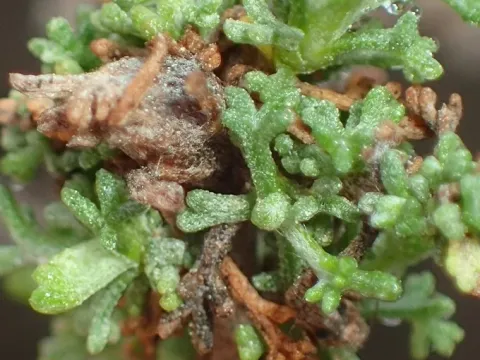
White wormwood
Artemisia herba-alba
White wormwood is a perennial subshrub belonging to the Asteraceae family. It is a highly resilient plant, naturally adapted to arid and semi-arid environments across North Africa and the Middle East.
What the section contains
White wormwood
The plant thrives in well-drained, sandy, or rocky soils with low organic matter content. Its notable tolerance to soil salinity makes it an excellent candidate for the restoration of degraded rangelands in dry regions.
Optimal growth requires high solar radiation and minimal water availability. It is extremely sensitive to waterlogging, which promotes root rot and can lead to the rapid decline of plant density.
Propagation is typically achieved through seeds or vegetative cuttings. Providing adequate soil aeration is crucial for the establishment of the plants, as compacted soils inhibit root development and hinder long-term growth.
This species serves as a vital ecological component in desert landscapes. Its extensive root system helps prevent soil erosion by stabilizing loose, sandy surfaces, thereby contributing to land conservation efforts.
As a forage crop, White wormwood is used mainly in arid zones where high-quality forage is scarce. While its bitter taste limits palatability, it serves as a necessary source of nutrition for sheep and goats during dry seasons.
Harvesting for pharmaceutical use is best timed during the flowering phase, when the concentration of essential oils, such as thujone and camphor, is at its peak. This ensures high-quality extracts for industrial applications.
With standardized agricultural practices, growers can achieve consistent yields of dry biomass. Depending on environmental factors and plant density, yields can range from 0.5 to 1.5 tons per hectare in managed stands.
Economic potential lies in the extraction of bioactive compounds for the cosmetics and health industries. Proper post-harvest handling, including shade drying, is essential to preserve the volatile components of the herb.
Controlled pruning of the plants after harvest stimulates regrowth and improves the architectural integrity of the subshrub. Sustainable harvesting cycles are necessary to prevent plant stress and maintain long-term production levels.
Fungal diseases, specifically powdery mildew and leaf spot, are the most frequent threats during periods of unexpected high humidity. These infections can severely impact the quality of the harvested biomass.
Pest pressure from moth larvae and aphids can be significant in some cultivation areas. Regular field scouting is necessary to detect outbreaks early and prevent widespread damage to the foliage and buds.
Weed competition is a critical issue during the seedling stage. Implementing mechanical weeding or mulching can significantly improve survival rates and reduce the time needed for the crop to establish itself.
Overgrazing remains the primary threat to natural and semi-natural populations of White wormwood. Implementing rotational grazing patterns is the most effective management strategy to preserve plant health and ecosystem productivity.
The use of chemical inputs must be carefully managed, particularly for plants destined for medical markets. Integrated Pest Management (IPM) practices should be prioritized to ensure both crop health and end-user safety.