
White-flowered chamomile
Anthemis leucanthemifolia
Description
Sowing dates
The sowing season for Anthemis leucanthemifolia begins in early spring when the soil temperature consistently reaches at least 10–12 degrees Celsius. Proper timing ensures uniform germination.
Seeds should be sown shallowly, ideally at a depth of 1–2 centimeters, because they require light for optimal germination. The field should be finely prepared to prevent the seeds from drying out in the top layer.
A row spacing of 20 to 25 centimeters is recommended for field-scale production. This density ensures that the canopy closes adequately to suppress weed growth while maintaining sufficient airflow between the rows.
After seeding, light rolling is recommended to ensure firm contact between the seeds and the soil. Adequate moisture must be maintained during the first two weeks of germination to ensure an even emergence of seedlings.
Winter sowing is sometimes practiced in warmer climates to leverage early-season moisture. This technique often results in more robust plants that can utilize the full length of the spring growth window.
Growing requirements
The white-flowered chamomile (Anthemis leucanthemifolia) is an annual herbaceous plant belonging to the Asteraceae family. It is recognized for its botanical simplicity and its role as a potential medicinal or industrial crop in various climatic zones.
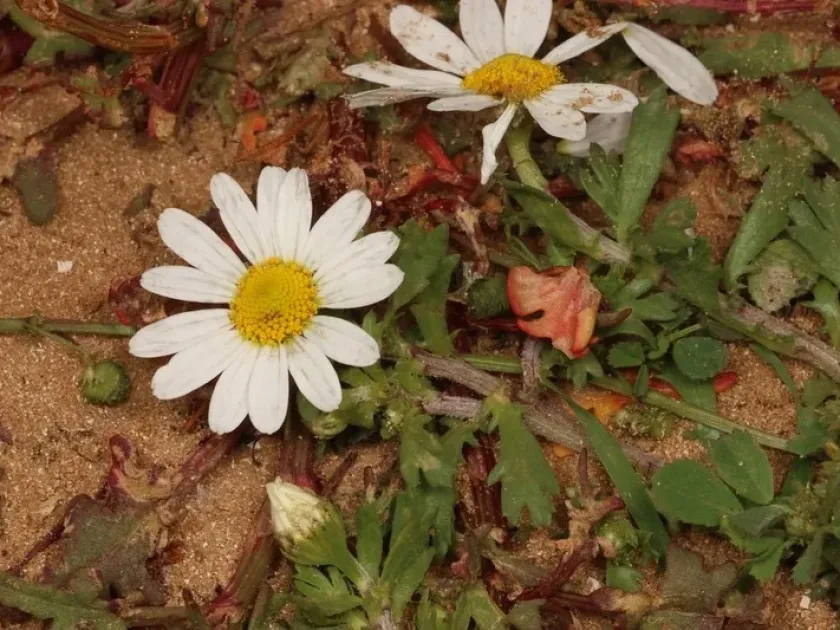
Botanically, the plant features finely divided, feathery leaves and terminal flower heads with white ray florets and yellow disk florets. It typically reaches a height of 40 to 60 centimeters, characterized by a well-branched stem structure.
This crop thrives in open, sun-exposed environments. It is highly thermophilic, preferring long, sunny days to reach its full vegetative and reproductive potential, making it ideal for cultivation in warmer, temperate regions.
Regarding soil requirements, it prefers well-drained, light-textured soils such as sandy loams. Heavy, waterlogged soils are unsuitable, as they can cause root rot and significantly hinder the development of the plant's taproot system.
Maintenance involves routine weeding and soil aeration during the early growth stages. Since the plant is drought-resistant, it is a low-maintenance crop, requiring supplemental irrigation only during prolonged dry spells.
Main diseases and pests
Root rot is the most common threat to the crop, particularly in poorly drained fields. To mitigate this risk, it is essential to ensure adequate soil drainage and avoid excessive irrigation.
Aphids can occasionally infest the flower heads, particularly during the flowering stage. If pest populations exceed economic thresholds, soft soap solutions or biological insecticides are recommended to avoid damaging the quality of the harvested materials.
Powdery mildew may manifest as a white fungal layer on the leaves, especially when hot, dry days are followed by humid nights. Proper plant spacing is the most effective cultural method to prevent this condition.
Pests such as leaf-eating insects are generally minor but should be monitored. A strict crop rotation schedule prevents the buildup of soil-borne pathogens and keeps the field healthy for subsequent planting cycles.
Integrated pest management (IPM) is highly advised for this crop. Because it is often cultivated for medicinal purposes, chemical inputs should be minimized to ensure the final product meets safety and quality standards.
Harvesting
Harvesting should occur during the full bloom phase, when the flower heads contain the highest concentrations of essential oils and active phytochemicals. This timing is critical for ensuring the commercial value of the yield.
Mechanical harvesting is feasible, provided the crop is cut in dry weather conditions. Harvesting during early morning hours after the dew has evaporated prevents moisture from promoting fungal growth in the storage containers.
Post-harvest processing involves immediate drying in well-ventilated areas. Temperatures in drying facilities must not exceed 45 degrees Celsius to maintain the integrity of the plant's volatile compounds.
Once dried, the chamomile flowers should be packed loosely in breathable containers to prevent overheating or dampness. Proper drying results in a product that maintains its color and potent fragrance for an extended period.
Storage should be conducted in dark, dry environments to prevent photochemical degradation of the dried florets. When stored correctly, the shelf life of the white-flowered chamomile can reach up to two years without significant loss of quality.