
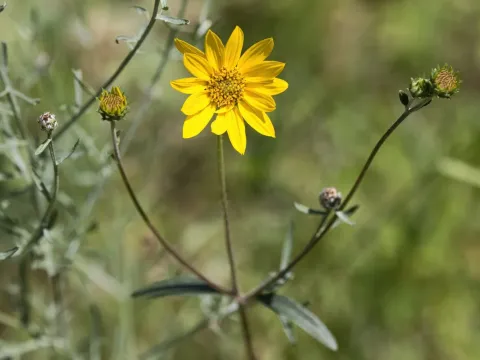
Western sunflower
Helianthus occidentalis
Western sunflower (Helianthus occidentalis) is a perennial member of the Asteraceae family. Known for its distinct growth habit compared to the common annual sunflower, it develops a deep, robust rhizomatous root system.
What the section contains
Western sunflower
Sowing should ideally occur in early spring. Seeds require a period of cold, moist stratification to break dormancy, which mimics the natural overwintering process necessary for successful germination.
The seeds should be planted at a shallow depth of approximately 1 inch (2–3 cm) in well-drained, loose soil. Maintaining consistent moisture in the seedbed during the initial weeks is critical for establishment.
Alternatively, vegetative propagation through the division of rhizomes is highly effective. This process is best performed during the plant's dormant phase in early spring before new shoot growth begins.
Plant spacing is essential for air circulation. Providing a distance of at least 20–30 inches between individual plants ensures that the sunflower colony has adequate space to spread without competing for nutrients.
This species is highly heliophilic, meaning it thrives in full sun conditions. Providing at least 6–8 hours of direct sunlight is necessary to maintain a strong, upright stem and vigorous flowering potential.
Soil requirements are relatively modest. The Western sunflower prefers well-drained, sandy, or rocky soils, which reflect its native habitat in dry prairies and open woodlands. It shows significant tolerance to drought once established.
The plant is adapted to a wide range of soil pH levels but performs best in slightly acidic to neutral environments. Heavy clay soils that retain excess moisture should be amended with organic matter to improve drainage.
Fertilization is rarely required in natural settings, but in agricultural or garden plots, a balanced phosphorus-rich fertilizer can enhance root health. Excessive nitrogen should be avoided as it encourages weak, spindly growth.
The Western sunflower is hardy and well-adapted to the temperate climate. Its deep root system allows it to withstand significant temperature fluctuations and prolonged dry spells during the summer growing season.
Fungal pathogens such as powdery mildew represent the primary threat to plant health, particularly in areas with poor air circulation or high humidity. Promoting airflow is the most effective preventative measure.
Aphids are the most common insect pests, typically clustering on the undersides of leaves and new flower buds. If left unmanaged, their feeding can weaken the plant and transmit viral diseases.
Root rot is a major risk in waterlogged soils. Ensuring that the site has a proper slope or drainage system is crucial to preventing the colonization of the roots by oomycetes and other pathogens.
Caterpillars and certain beetle species may feed on the foliage, though the Western sunflower often tolerates minor damage well due to its vigorous nature. Regular monitoring allows for early detection of large populations.
Weed competition during the seedling stage can significantly suppress development. Mulching around the base of the plant helps retain soil moisture while inhibiting the growth of unwanted vegetation.