
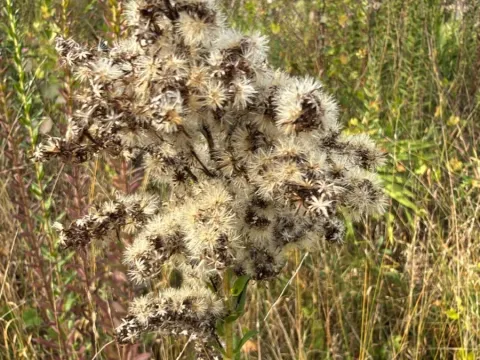
Pine-barren goldenrod
Solidago fistulosa
Solidago fistulosa, commonly known as pine-barren goldenrod, is a perennial herbaceous plant belonging to the Asteraceae family. It is recognized for its utility as a late-season pollen and nectar source in agricultural ecosystems.
What the section contains
Pine-barren goldenrod
The plant is native to the southeastern regions of the United States. It naturally thrives in moist meadows, pine barrens, and disturbed wetlands, showcasing high environmental adaptability in its native range.
Botanically, it is characterized by its distinct, often clustered flower heads and stems that exhibit specific resistance to common soil moisture fluctuations. The species typically reaches heights ranging from 1 to 2 meters.
Successful cultivation requires soil that is consistently moist yet permeable. While it tolerates various soil textures, optimal growth is observed in sites with a rich organic layer and full sun exposure.
Management techniques involve regular spacing to allow for adequate air circulation, preventing the development of fungal pathogens. It is a hardy plant that persists well once established in suitable ecological niches.
The culture is susceptible to various leaf spot diseases, especially in climates characterized by high humidity and poor ventilation within the crop canopy.
Aphids represent a primary pest threat, as they tend to congregate on the flower buds and young foliage, potentially damaging the reproductive potential of the plant.
Root rot pathogens may emerge if the soil remains waterlogged for extended periods, leading to stunted growth or total plant loss in poorly drained agricultural fields.
Monitoring for insect pests should be intensified during the late spring and early summer months to ensure the plants reach their peak blooming potential for pollinators.
Preventive maintenance, such as ensuring adequate distance between plants and promoting robust initial growth, is essential for minimizing the impact of these typical threats.