
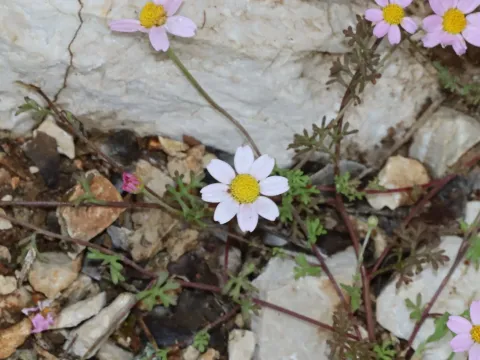
Pink Chamomile
Anthemis rosea
Sowing Pink Chamomile seeds in open ground is best performed in the spring, once the soil has sufficiently warmed, typically in April or early May. For an earlier bloom, it is possible to start seedlings in greenhouses or cold frames before transplanting them into the field.
What the section contains
Pink Chamomile
The optimal planting depth for the seeds is no more than 0.5 to 1 centimeter, as the seeds are small and require adequate light exposure for germination. After sowing, the soil should be lightly compacted and kept moderately moist until the first shoots appear.
Shoots usually emerge within 14 to 20 days after sowing, provided that the temperature remains within the optimal range. Thinning the seedlings is essential, maintaining a spacing of at least 20 to 30 centimeters between plants to ensure full development of the root system and foliage.
The plant handles transplantation well at the stage of the first true leaves, which makes it suitable for use in complex floral arrangements. The species is characterized by high seed vigor, retaining viability for up to 3 to 4 years when stored under proper conditions.
Late autumn sowing is only possible in regions with mild climates, where there is no risk of seeds freezing before the onset of hard winter. This practice allows for earlier vegetative growth at the beginning of the next season.
Pink Chamomile is a perennial herbaceous plant from the Asteraceae family, native to the mountainous regions of Asia Minor. In its natural habitat, it grows on rocky slopes, which defines its high drought tolerance and low demand for soil fertility.
For successful growth, the plant requires a sunny location, sheltered from strong winds and waterlogging. Excessive moisture in the soil, especially during winter, can cause root rot, making effective drainage a critical factor when selecting a cultivation site.
It prefers light, loose, limed loams or sandy soils with a neutral to slightly alkaline pH. On heavy clay soils, the plant develops slowly and is frequently affected by fungal diseases due to poor root aeration.
The culture exhibits high winter hardiness, although it may require light protection with branches or dry leaves during severe, snowless winters. The plant responds well to minimal phosphorus and potassium fertilizer application during the budding stage, which stimulates abundant flowering.
Agricultural management includes regular weeding of rows and clearing weeds that can suppress the development of Pink Chamomile in the first months after planting. Watering is only required during periods of prolonged drought, as the plant effectively utilizes internal moisture reserves.
Pink Chamomile is generally highly resistant to most typical agricultural crop diseases; however, if humidity levels are poorly managed, it can be susceptible to powdery mildew. The first signs are a white powdery coating on the leaves, which spreads rapidly in high air humidity.
In conditions of prolonged rainfall, the development of root rot caused by pathogenic fungi is possible due to water stagnation in the root zone. Prevention involves strict adherence to watering schedules and ensuring high-quality drainage of the site before planting.
Among pests, the greatest threat to the aerial parts of the plant are aphids and spider mites, which feed on the sap of young shoots and buds. In case of massive outbreaks, the use of biological control agents or authorized systemic insecticides is recommended.
Nematodes can damage the root system in contaminated soils, leading to stunted growth and yellowing of the foliage. An effective method of control is strict adherence to crop rotation, returning the plant to the same area no sooner than after 4 to 5 years.
To prevent the spread of harmful organisms, it is necessary to remove dead plant parts in the autumn and perform sanitary cleaning of the site. Using healthy planting material is the key to successfully cultivating the species without the need for excessive chemical use.
Harvesting of Pink Chamomile flowers is conducted during the peak flowering phase, when the heads are fully open but have not yet begun to fade. It is at this stage that the concentration of bioactive compounds reaches its maximum for medicinal use.
Flowers should be cut together with short stems using sharp shears or scissors, ensuring the main plant is not damaged. After harvesting, the material must be dried immediately, as it is prone to rapid darkening if left in conditions of high temperature and humidity.
Drying is carried out in well-ventilated shaded areas or specialized dryers at temperatures not exceeding 40 degrees Celsius. It is crucial to spread the flowers in a thin layer to prevent overheating and the loss of essential oils, which give the plant its characteristic aroma.
Once dried, the raw material is sorted to remove debris and discolored parts, then packed in airtight containers or paper bags. Storage should be in a dry, dark, and cool place to maintain medicinal properties for up to two years.
For ornamental purposes, harvesting involves the periodic removal of spent flower heads, which stimulates a second wave of blooms by the end of summer. This practice maintains the aesthetic appeal of flower beds and gardens throughout the entire growing season.