
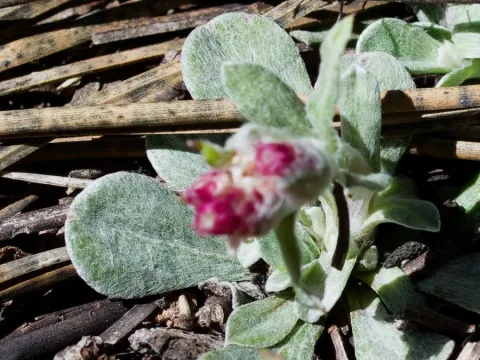
Pink pussytoes
Antennaria rosea
Pink pussytoes, known botanically as Antennaria rosea, is a perennial flowering plant belonging to the Asteraceae family. It is valued for its low-growing, mat-forming habit.
What the section contains
Pink pussytoes
Seeds can be sown in late autumn or early spring. Due to the small size of the seeds, they should be surface-sown on moist soil without being covered by deep layers of substrate.
Cold stratification is highly recommended to improve germination rates. This mimics natural environmental cycles and ensures uniform emergence of the seedlings.
Vegetative propagation is achieved by dividing mature clumps. This operation is best performed in early spring or autumn to ensure the plant can establish before seasonal temperature changes.
Correct spacing during planting allows the mats to spread effectively, creating the characteristic groundcover layer preferred in landscaping.
Antennaria rosea requires environmental conditions similar to its native alpine or rocky habitats to thrive.
Full sun is essential for maintaining the plant's health. In shaded areas, the rosettes become leggy, and the vibrant flower heads are significantly reduced.
Soil quality should be sandy, gritty, or gravelly with excellent drainage. The plant prefers low-fertility soils and often struggles in nutrient-rich or heavy loams.
Drainage is the most critical factor in soil management. The roots must not remain in wet soil, as this leads to physiological stress and potential root damage.
It is a highly drought-tolerant species once established, making it suitable for xeriscaping and sustainable garden design in dry climates.
While pink pussytoes are naturally hardy and resilient, certain maintenance practices are necessary to prevent common agricultural and gardening threats.
Fungal pathogens associated with excessive moisture are the most significant threat to the health of the plants throughout the growing season.
Root rot is the primary danger if the soil moisture levels are not managed correctly, especially in areas with frequent rainfall or poor drainage.
Proactive monitoring of the mats for yellowing leaves or thinning areas can help identify early stages of infection or environmental stress.
- Ensure soil has adequate drainage.
- Avoid overhead irrigation.
- Provide good air circulation.
- Remove any decaying plant matter promptly.