
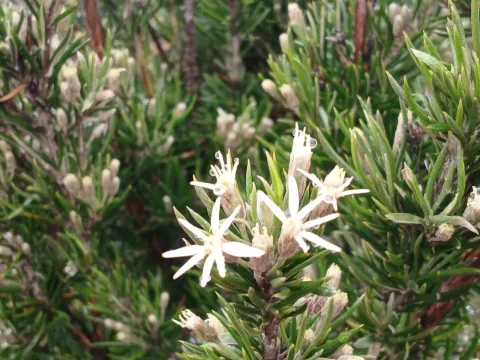
Pine-leaved daisy bush
Olearia pinifolia
Olearia pinifolia, commonly known as the Pine-leaved daisy bush, is a distinctive evergreen shrub belonging to the Asteraceae family. Native to the rugged landscapes of Tasmania and parts of Australia, it is prized for its resemblance to coniferous plants despite being a flowering member of the daisy family.
What the section contains
Pine-leaved daisy bush
The plant features thin, needle-like foliage that creates a dense and attractive texture. During the flowering season, it produces small, clustered daisy-like blossoms that provide a subtle contrast to its dark green, needle-like leaves, making it a highly desirable specimen for ornamental horticulture.
Successful cultivation of this species requires well-draining, slightly acidic soil conditions. It is essential to ensure that the planting site has excellent drainage, as the roots are particularly susceptible to rot if left sitting in waterlogged soil for extended periods.
Regarding climate, the plant thrives in cooler, temperate environments with high humidity levels. It prefers a location that offers plenty of natural light but appreciates some protection from harsh afternoon sunlight and strong, desiccating winds that can damage the delicate tips of its foliage.
In terms of agricultural and horticultural use, Olearia pinifolia is primarily utilized in landscape architecture to provide structural interest in rock gardens and shrub borders. Its tolerance for various soil types (provided drainage is adequate) makes it a versatile choice for modern garden designs.
The most common threats to the health of Olearia pinifolia include root rot fungi, which are often triggered by improper irrigation practices. To mitigate this risk, it is recommended to monitor moisture levels regularly and ensure that mulch does not pile up directly against the main stems.
Insect pests such as scale insects and spider mites can occasionally affect the plant, especially when grown in environments with poor air circulation. Regular pruning to keep the canopy open and the application of horticultural oils or soap sprays during early stages of infestation are effective management strategies.